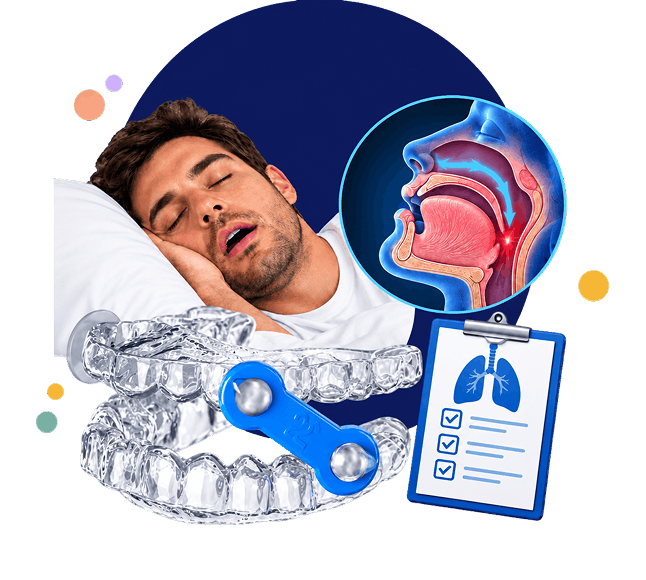
Snoring Mouth Guards:
What Works and When to Test for Sleep Apnea
You stop snoring. The room goes quiet. Then, ten minutes later, the sound starts again, louder, and your partner moves to the couch. You have looked at snoring mouth guards online, but the reviews are confusing and the prices range from twenty dollars to thousands. Which one actually works? And does a mouthpiece even fix the real problem?
Here is the honest answer, starting with the question most stores skip: is your snoring just noise, or is it a warning sign?
Reviewed by Licensed Dentists
Snoring and Sleep Apnea Are Not the Same Thing
Snoring can be harmless, but it can also be a sign of a sleep-related breathing problem. Understanding the difference is an important first step.
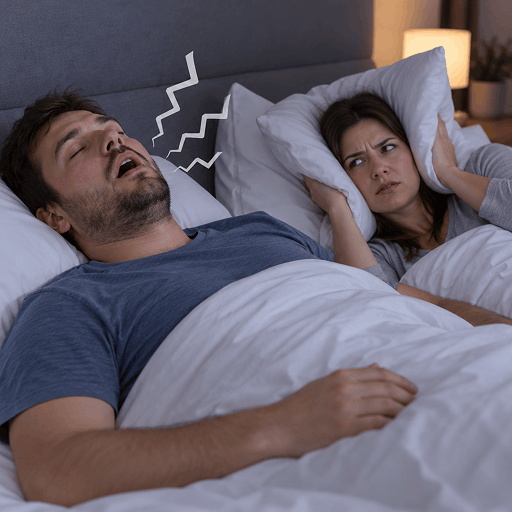
Snoring
Often HarmlessSnoring happens when relaxed tissue in your throat vibrates as you breathe during sleep. Light, occasional snoring is common and usually harmless. Its main impact is on whoever shares the room with you.
Occasional snoring does not automatically mean you have a sleep disorder.
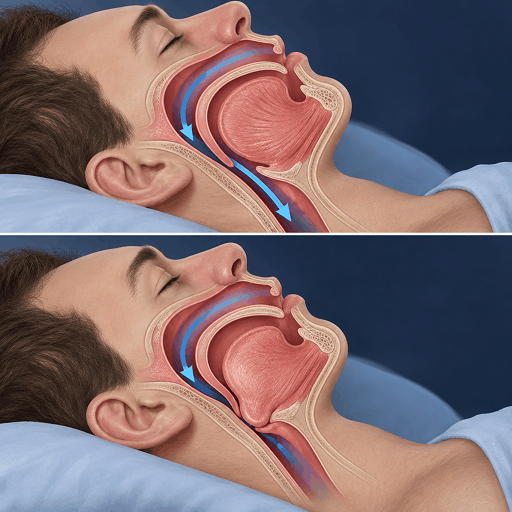
Sleep Apnea
Needs EvaluationWith obstructive sleep apnea, your airway narrows or collapses repeatedly during sleep. Breathing pauses or stops, and your body has to work harder to keep oxygen flowing.
Sleep apnea needs medical evaluation and appropriate treatment.
You Cannot Tell the Difference by Listening
Many people with sleep apnea snore loudly, and many snorers do not have apnea at all. Some people with apnea never notice a single symptom and stay undiagnosed. That is why a snoring mouth guard should never be the first step.
The Sleep Test Is the First Step.When Snoring Signals Something More Serious
Snoring alone is usually not dangerous. Snoring plus other signs is a pattern worth checking. Watch for:
Loud snoring three or more nights per week
Gasping, choking, or snorting during sleep
Pauses in breathing that a partner can hear
Waking with a dry mouth or a morning headache
Feeling exhausted during the day no matter how long you slept
Snoring related to sleep apnea often comes with gasping for air and daytime fatigue. If several of these describe your nights, ask for a sleep evaluation before buying anything.
When to Seek Urgent Medical Care
If your partner says your breathing stops and starts, you wake gasping and cannot catch your breath, or you have chest pain, seek urgent in-person medical care rather than waiting for a scheduled consultation. Severe or persistent breathing difficulty or chest pain may require emergency services.
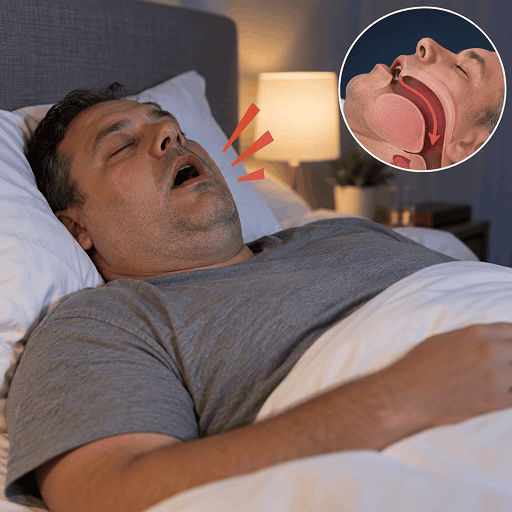
Recognizing the signs can help you decide when to seek a sleep evaluation.
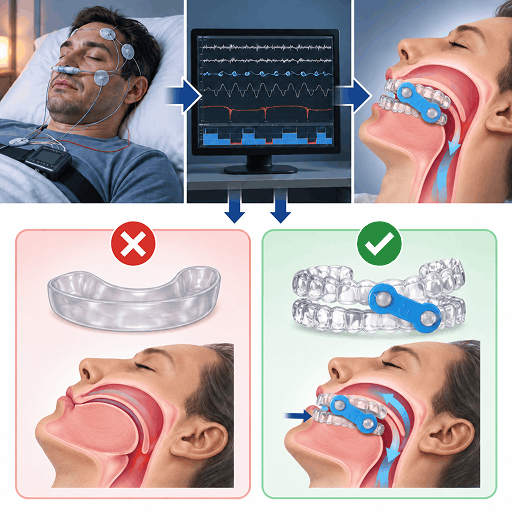
Understand your sleep before choosing treatment.
Why a Sleep Test Must Come Before Any Mouth Guard
It is tempting to skip straight to a solution. There are two good reasons not to.
The Right Treatment Depends on the Diagnosis
If you have undiagnosed obstructive sleep apnea, a basic snore guard is not enough. Untreated apnea is associated with high blood pressure, coronary artery disease, and stroke.
If you only snore, you may not need an apnea-grade device at all. A sleep physician reads your test and prescribes accordingly.
Effective Oral Appliances Are Prescription Devices
People are prescribed oral appliances by their sleep specialist, and a licensed dentist provides the device.
Professional evaluation and fitting help ensure the appliance is appropriate for your diagnosis and fits your mouth properly.
Boil-and-Bite vs Custom-Made: The Honest Comparison
Drugstore snore guards cost little and require no prescription, which explains their popularity. The tradeoffs are real, though.
| Comparison | Boil-and-Bite / One-Size | Custom-Made Oral Appliance |
|---|---|---|
| Fit | Molds loosely to your teeth; fit is approximate | Made from digital impressions of your teeth |
| Jaw Position | Fixed by the mold | Adjusted to your airway over time by a dentist |
| Over Time | Loosens | Adjustable (titratable) as needed |
| Studied for Sleep Apnea | Many have not been studied as treatments for obstructive sleep apnea | Recommended by clinical guidelines over non-custom devices |
| Prescription | Not needed | Prescribed by a sleep physician |
| Checking It Works | No check; can mask snoring while breathing pauses continue | A follow-up sleep test confirms it is working |
A systematic review found that custom-fabricated mandibular advancement devices performed more favorably than thermoplastic devices in treatment outcomes.
What a Custom Snoring Mouth Guard Actually Does
A custom oral appliance, sometimes called a mandibular advancement device, gently moves your lower jaw forward a few millimeters. Advancement typically ranges from 3 to 8 mm and is adjusted over time. Moving the jaw forward carries the base of the tongue and the soft palate forward with it, which enlarges the space behind them and reduces the risk of airway collapse.
Less vibration, quieter nights.
For people who snore without apnea, oral appliances reduce the frequency and intensity of snoring and improve sleep quality for both the snorer and the bed partner.
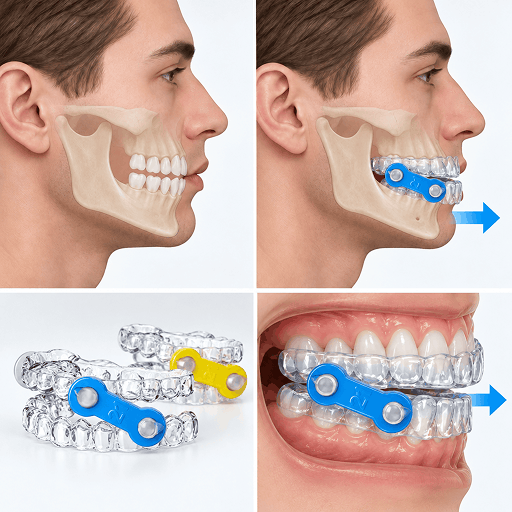
Supporting A More Open Airway
A properly fitted oral appliance helps position the jaw forward during sleep.
What Will a Snoring Mouth Guard Cost Me?
The cost of a custom oral appliance depends on your diagnosis, your insurance plan and the device your dentist prescribes. Rather than quote a number that may not apply to you, Dentulu verifies your benefits first and gives you a personalised estimate before you commit.
Insurance & Medicare
When prescribed for diagnosed obstructive sleep apnea, oral appliance therapy is a covered medical benefit under many plans, including Medicare. Coverage depends on your plan and eligibility — we check it for you.
HSA / FSA
Pre-tax HSA and FSA funds can be applied to your treatment and to the home sleep test.
Flexible Payments
Monthly payment plans are available for any portion not covered by insurance. Terms and eligibility vary; your coordinator will walk you through the options.
How to Get a Snoring Mouth Guard Through Dentulu
Book a Virtual Consultation
- Describe your snoring, who hears it, and how you feel in the morning.
Complete Your Home Sleep Test
- A physician orders your home sleep test. The FDA-cleared device ships to you, is worn for one night, and is returned using the prepaid shipping label.
Get Your Sleep Test Results
- A sleep physician reviews your results within 3–5 business days and determines whether sleep apnea is present.
Get Your Custom Mouth Guard Fitted
- If an oral appliance is prescribed, a dentist takes digital impressions and your custom device is fabricated.
Fine-Tune Your Treatment
- Adjust your device during follow-up visits, and complete a follow-up sleep check to confirm treatment effectiveness.
The home sleep test starts at $249. If you completed a sleep study within the past 12 months, it may be usable instead of a new test. Dentulu supports patients through licensed dentists across all 50 states.
Not sure whether your snoring points to sleep apnea? The sleep test helps determine whether apnea is present. Already diagnosed with sleep apnea? Take the 2-minute sleep apnea questionnaire and explore our Sleep Apnea Mouth Guards page to learn more.
Book a Virtual ConsultationHave questions?
Get answers