CPAP alternatives and custom oral appliance therapy for sleep apnea

CPAP Not Working for You? There Are Real Alternatives

How a custom oral appliance compares with CPAP, honestly

The mask is back on the nightstand. The hose found its way behind the dresser again. You know the machine helps, but between the strap marks on your face, the noise, and the fiddly setup, most nights it loses to the pillow.

You are not alone, and you are not out of options. There are real, prescribed alternatives to CPAP, and one of them may fit your life better. Here is an honest look at how they compare, with no exaggeration in either direction.

Why People Look for a CPAP Alternative

A CPAP machine pushes pressurized air through a mask to hold your airway open during sleep. It works, and consistent use measurably improves the symptoms of obstructive sleep apnea.

CPAP Remains The Gold Standard

CPAP remains the gold standard for severe obstructive sleep apnea, and a sleep physician decides what fits your situation.

The Challenge Is Sticking With It

The honest problem is sticking with it. People who are diagnosed with a sleep-related breathing disorder are often prescribed positive airway pressure therapy, and many struggle to use it every night.

If you have quietly given up on yours, the most useful thing you can do is tell your care team and look at alternatives rather than treating nothing at all.

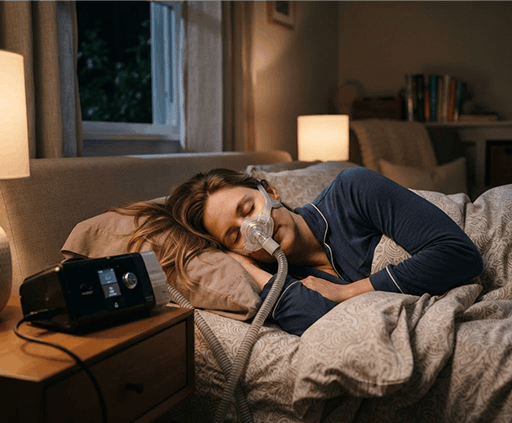
Woman sleeping comfortably beside a CPAP machine

The Real Reasons People Abandon CPAP

The frustrations are specific and predictable:

1
Mask Discomfort

Pressure marks, skin irritation, and straps that never sit quite right.

2
Claustrophobia

A sealed mask over the nose or face feels confining, and for some people it triggers anxiety.

3
Noise And Airflow

The hum of the motor and the constant rush of pressurized air bother light sleepers and their partners.

4
Nasal Congestion And Dryness

Congestion, skin irritation, dry mouth, and air swallowing are documented CPAP side effects.

5
Travel And Setup

A machine, hose, mask, and power supply make even short trips feel like moving day.

CPAP vs Oral Appliance:

The Side-by-Side Comparison

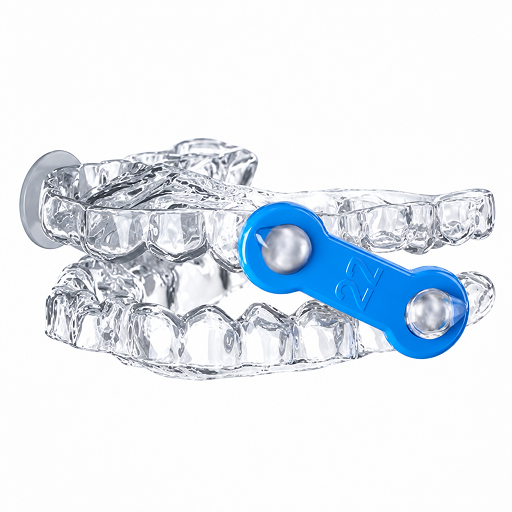
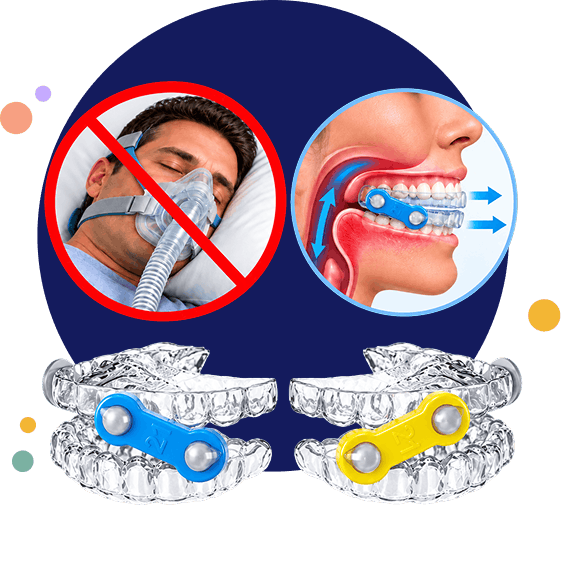
Oral appliance therapy is the most common prescribed alternative. A custom device holds your lower jaw slightly forward during sleep, which carries the tongue base and soft palate away from the back of the throat and reduces the risk of airway collapse.

Factor CPAP Oral Appliance Alternative Option
Effectiveness CPAP Gold standard; most effective therapy for severe obstructive sleep apnea (OSA). Oral Appliance Effective for mild to moderate OSA; recommended for adults intolerant of CPAP.
Comfort CPAP Mask pressure, strap marks, and possible claustrophobia. Oral Appliance Custom-fitted to your teeth; adjusts across follow-up visits.
Noise CPAP Motor hum and airflow that some sleepers and partners notice. Oral Appliance Silent
Power CPAP Needs an outlet and, for some models, distilled water. Oral Appliance None; works anywhere you sleep
Travel CPAP Machine, hose, mask, and adapters. Oral Appliance A small case in your bag
Nightly Use CPAP Well-documented challenges; many users struggle to use it nightly. Oral Appliance Studies report that people tend to use oral appliances more consistently than CPAP.
What To Keep In Mind

Two Honest Notes On This Comparison

01

CPAP Wins On Raw Effectiveness

CPAP is especially important for severe sleep apnea. Do not stop or replace prescribed CPAP treatment without discussing your options with your sleep physician.

02

Consistency Matters

An appliance only helps when you actually wear it. Comfort, a proper fit, and follow-up adjustments can all influence whether it works for you.

What Oral Appliance Therapy Can and Cannot Do

Understand how custom oral appliances work, where they help, and why professional diagnosis and follow-up are essential.

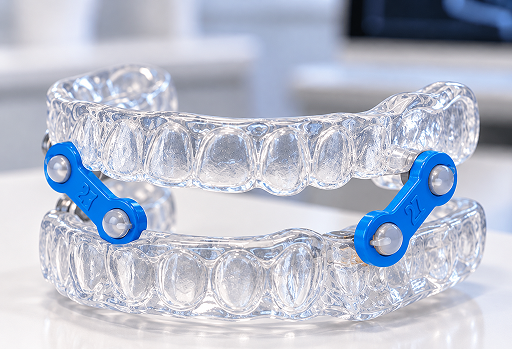
Custom oral appliance used during sleep apnea treatment How It Helps
What It Does
Helps Keep Your Airway Open

A custom mandibular advancement device moves your lower jaw forward, typically 3 to 8 mm, adjusted over time to help keep the airway open while maintaining jaw comfort.

01

Custom-Fitted Device

Guidelines recommend a custom, titratable appliance rather than a non-custom device.

02

Adjusted For Comfort

A qualified dentist adjusts the device during follow-up visits to balance jaw comfort and treatment.

03

Effectiveness Verified

A follow-up sleep test helps confirm whether the therapy is adequately controlling your apnea.

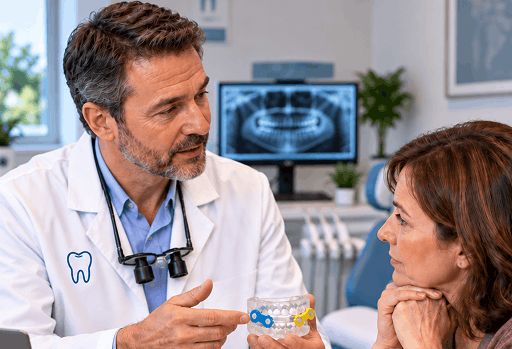
Sleep specialist discussing sleep apnea treatment options with a patient Know The Limits
What It Cannot Do

It Cannot Replace A Diagnosis

An oral appliance cannot diagnose sleep apnea or determine its severity. Appropriate medical evaluation is essential before choosing treatment.

01

Sleep Study First

A sleep physician evaluates your condition after a sleep study and recommends an appropriate treatment plan.

02

CPAP May Still Be Necessary

CPAP generally remains the most effective option for severe obstructive sleep apnea.

03

Requires A Qualified Provider

A licensed dentist provides and fits the appliance, with monitoring for comfort, dental effects, and treatment effectiveness.

Oral appliance prepared for professional sleep apnea treatment
Your Next Step

Is An Oral Appliance Right For You?

It can be a suitable option for adults with mild to moderate sleep apnea and for those who cannot tolerate CPAP or prefer an alternative. A sleep physician and qualified dentist can help determine whether it fits your needs.

Who Should Consider a CPAP Alternative?

Sleep physicians may recommend an oral appliance or another treatment based on your sleep apnea severity, comfort, and treatment preferences.

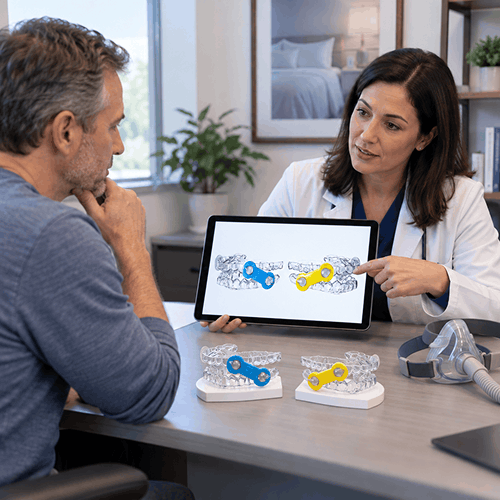
Patient discussing CPAP alternative treatments with a sleep specialist
Personalized sleep care starts with the right evaluation
01

Mild to Moderate Sleep Apnea

You have mild to moderate obstructive sleep apnea and want to explore whether a custom oral appliance could help manage your condition.

02

CPAP Is Difficult to Tolerate

You struggle with mask discomfort, anxiety, noise, or the burden of traveling with CPAP equipment—or prefer to discuss another option.

03

Regular Snoring Without Sleep Apnea

You snore regularly and want to explore treatment for primary snoring after sleep apnea has been appropriately evaluated.

Explore Snoring Mouth Guards

Your CPAP History Matters

If your machine has been gathering dust, mask anxiety has interrupted treatment, or traveling with equipment feels burdensome, bring that history to your consultation. It helps your clinician recommend an option suited to you.

How to Switch From CPAP to an Oral Appliance

01

Book a virtual consultation and share your CPAP history and current symptoms.

02

Confirm your diagnosis is current. A sleep study from the past 12 months may be usable instead of a new test. If not, the physician-ordered home sleep test is worn for one night and returned with a prepaid label.

03

Get a decision. A sleep physician reviews your results within 3 to 5 business days and decides whether an oral appliance is appropriate for you.

04

Get fitted. If it is, a dentist takes digital impressions and your custom device is fabricated.

05

Fine-tune and confirm. You adjust the device across follow-up visits, and a follow-up sleep test confirms the therapy is working.

Home sleep test

Worn for two nights and returned with a prepaid label. Often covered by insurance and HSA/FSA eligible

Insurance & HSA/FSA

Many plans, including Medicare, cover 80 to 100 percent of mouth guard treatment. HSA and FSA funds can be applied.

Dentulu verifies your benefits and gives you a cost estimate before you commit. The dental cost estimator gives you a preview before any conversation.

When to Seek Urgent In-Person Medical Care

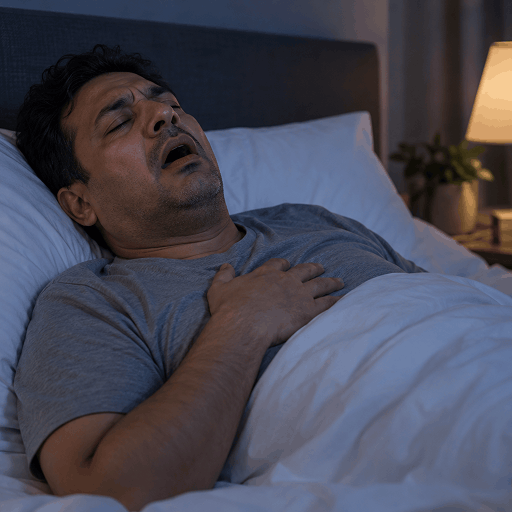
A mouthpiece is planned care. Some symptoms are not. Seek urgent in-person medical care if your partner observes long breathing pauses that frighten them, you wake gasping and cannot catch your breath, you have chest pain, or your lips or face look bluish.

Untreated obstructive sleep apnea is associated with serious outcomes including hypertension, coronary artery disease, stroke, and increased mortality.

If symptoms are severe tonight, call 911 or contact emergency services now.

Person experiencing breathing difficulty while sleeping
Recognize warning signs. Seek urgent care.

Frequently Asked Questions

For most adults who cannot tolerate CPAP, the best alternative is custom oral appliance therapy prescribed by a sleep physician. It holds the jaw forward to keep the airway open, and guidelines recommend a custom, titratable appliance fitted by a qualified dentist. Positional therapy, weight management, and surgical options exist for specific cases, and a sleep physician determines which fits your test results.

Yes, for many people. Oral appliance therapy is a recommended treatment for mild to moderate obstructive sleep apnea and for adults who cannot tolerate CPAP or prefer another therapy. For severe apnea, CPAP usually remains the first-line treatment, and a sleep physician makes that call based on your study.

For severe obstructive sleep apnea, CPAP is more effective, which is why it remains the gold standard and the usual first choice. For mild to moderate apnea, a custom oral appliance can control apnea effectively. Effectiveness also depends on use, and a device you wear every night beats a machine you abandon.

Common reasons include mask discomfort, claustrophobia, motor noise, nasal congestion and dryness, air swallowing, and the inconvenience of traveling with equipment. If your machine is sitting in a drawer, tell your care team. Switching to a therapy you will actually use is better than leaving apnea untreated.

Start with a virtual consultation, then confirm your diagnosis with a sleep study. A sleep study from the past 12 months may be usable instead of a new test. A sleep physician reviews the results and, if an oral appliance is appropriate for you, a licensed dentist takes digital impressions and fits the custom device. Follow-up visits adjust the fit, and a follow-up sleep test confirms the result.

Cost depends on your diagnosis, your insurance and the appliance prescribed, so we give you a personalised estimate rather than a list price. Many medical plans, including Medicare, cover oral appliance therapy for diagnosed sleep apnea often under the same durable-medical-equipment benefit that covers CPAP and HSA/FSA funds and monthly payment plans are available. Dentulu verifies your benefits and sends you a written estimate before you commit.

Not necessarily. If your sleep study was completed in the past 12 months, it may be usable instead of a new test. Share it during your consultation and the care team will confirm whether it is sufficient. If it is older or unavailable, the physician-ordered home sleep test takes one night at home.