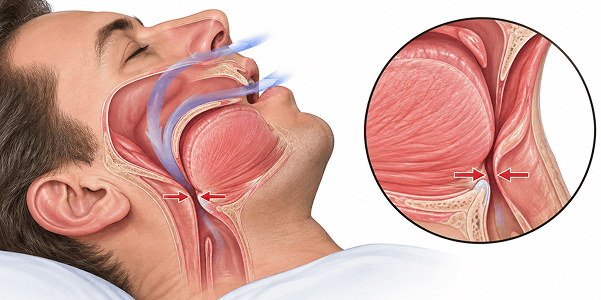
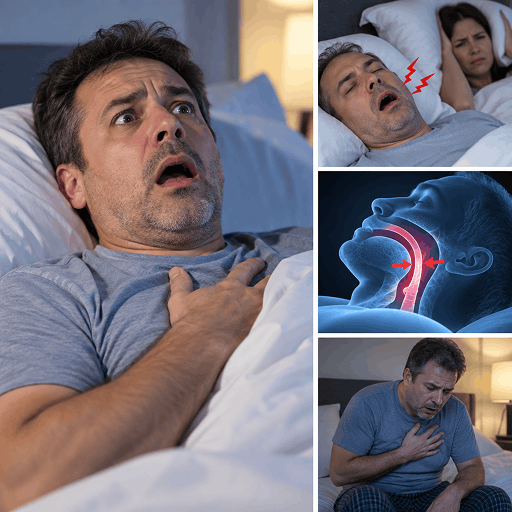
Without a MAD
Relaxed tissue can move backward and narrow the airway during sleep.
Airway narrows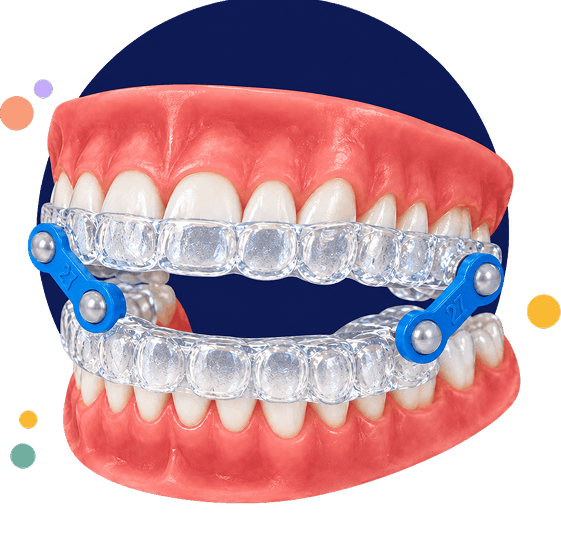
Your partner covers their ears. You wake up tired after eight full hours in bed. Somewhere in your throat, tissue is relaxing and crowding your airway every single night.
A mandibular advancement device is one of the most common prescribed treatments for that problem, and getting one is more straightforward than you might think. Here is what it is, how it works, what it costs, and the exact steps to get one.
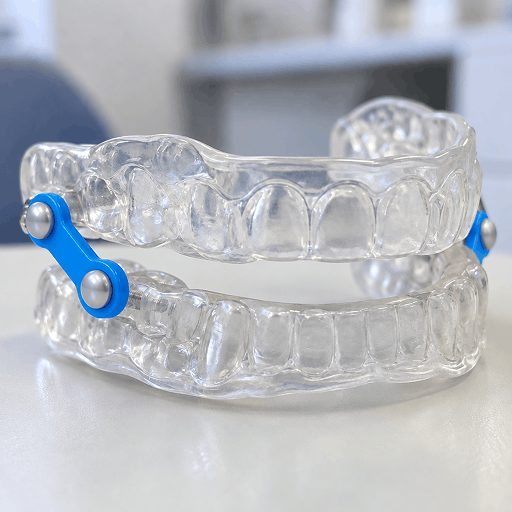
A mandibular advancement device, often shortened to MAD, is a custom dental appliance you wear while you sleep. It is also called a mandibular advancement splint, or more generally an oral appliance for sleep apnea. The name tells you what it does: it gently holds your lower jaw, which dentists call the mandible, slightly forward.
That small shift keeps your airway steadier through the night. Oral appliances like this are a commonly recommended treatment for people with mild to moderate obstructive sleep apnea, and for adults with severe apnea who cannot tolerate airway pressure therapy.
Start Your Sleep AssessmentA mandibular advancement device moves the lower jaw forward to help create more space at the back of the throat.
Relaxed tissue can move backward and narrow the airway during sleep.
Airway narrows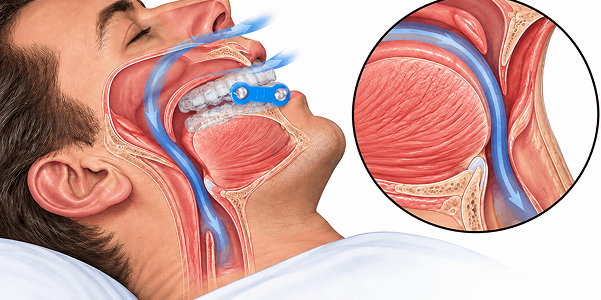
The jaw moves forward, helping enlarge the space where air flows.
Jaw forward, airway openWhile you sleep, the muscles that hold your airway open relax. The base of your tongue and your soft palate can drift backward, narrowing the space where air flows. When air squeezes past that narrowed space, the surrounding tissue vibrates, and you hear it as snoring. When the airway closes completely or almost completely, breathing stops. That is obstructive sleep apnea.
A mandibular advancement device moves the mandible, the tongue, and the soft palate forward together. This enlarges the airway space at the back of the throat and reduces the risk of the airway collapsing during sleep. Less vibration means quieter nights. A steadier airway means fewer breathing pauses.
See how your MAD is made and fittedSleep physicians prescribe oral appliances in several common situations. Your sleep study and clinical assessment help determine whether one is appropriate.
A custom oral appliance may be recommended for adults with mild to moderate obstructive sleep apnea.
If you cannot tolerate CPAP or prefer another therapy, discuss options with your sleep physician. Explore CPAP alternatives.
If you snore regularly without known apnea, get assessed to identify the cause and appropriate treatment. Read about snoring mouth guards.
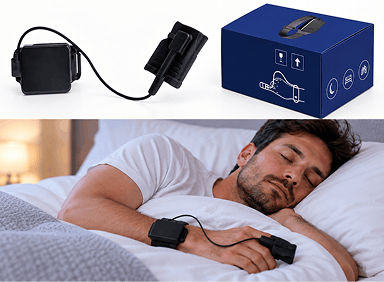
You cannot order a MAD the way you order headphones. Oral appliance therapy is a prescription treatment. Oral appliances are prescribed by a sleep specialist, and a licensed dentist then provides the device. The diagnosis comes first, and diagnosis comes from a sleep study.
With Dentulu, that study happens in your own bed:
A licensed physician orders your test.
An FDA-cleared home sleep test is shipped to your door. You wear it for one night.
You return it with the prepaid label included in the box.
A sleep physician reviews your results within 3 to 5 business days.
Home sleep test cash price starts at $249. If you already completed a sleep study in the past 12 months, it may be usable instead of a new test. Share it during your consultation and the care team will confirm.
Proper fit, gradual adjustment, and follow-up help your care team balance comfort with treatment effectiveness.
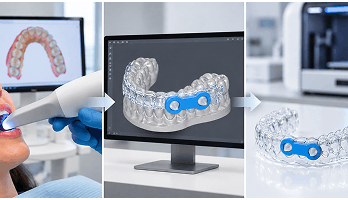
Once a physician prescribes therapy, a dentist takes digital impressions of your teeth. Your device is then made to those exact contours. Current guidance favors a custom, titratable appliance over non-custom oral devices, because fit and adjustability drive results.
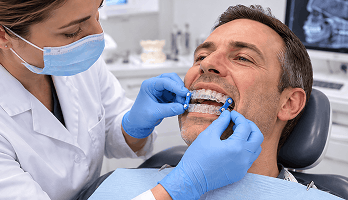
Jaw advancement typically starts modestly and builds. Dentulu custom devices advance the lower jaw by roughly 3 to 8 mm, and your dentist fine-tunes that position across follow-up visits. This adjustment, called titration, is normal and expected. It helps find a position where your airway stays open and your jaw stays comfortable.
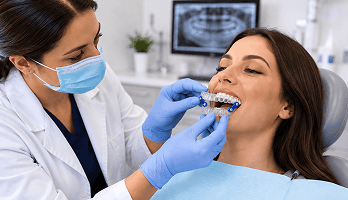
Most side effects are minor: dry mouth, extra saliva, gum discomfort, jaw soreness, and small changes in how your teeth meet. Your dentist monitors these at regular checkups, because ongoing oversight is part of proper therapy. A follow-up sleep test then confirms the device is controlling your apnea.
Your cost depends on your diagnosis, your insurance benefits and the appliance your dentist prescribes - so Dentulu gives you a personalised estimate, not a list price.
When prescribed for diagnosed obstructive sleep apnea, oral appliance therapy is a covered medical benefit under many plans, including Medicare. Coverage depends on your plan and eligibility – we verify it for you.
Book a virtual consultation and Dentulu verifies your benefits and sends you a written estimate before anything is ordered. Monthly payment plans are available for any portion not covered.
HSA and FSA funds can be used for both the home sleep test and your custom appliance.
Dentulu verifies your benefits and gives you a cost estimate before you commit. Try the dental cost estimator or review how dental insurance verification works.
Oral appliance therapy is planned care. Some situations cannot wait for a plan. Seek urgent in-person medical care if your bed partner observes long breathing pauses that frighten them, you wake gasping and cannot catch your breath, you have chest pain, or your lips or face look bluish.
Untreated obstructive sleep apnea is associated with serious health outcomes, including high blood pressure, coronary artery disease, and stroke.
If symptoms are severe or worsening tonight, call 911 or contact emergency services now. A device can wait. Your breathing cannot.
Follow these five steps to find out whether a custom MAD is right for you.
Describe your snoring, sleep history, and symptoms during a virtual consultation to get started with the evaluation process.
Complete a home sleep test ordered by a physician. The test is taken in your own home over one night.
A sleep physician reviews your test results, confirms your diagnosis, and determines whether oral appliance therapy may be appropriate for you.
If a custom device is right for you, a dentist takes digital impressions of your teeth so your mandibular advancement device can be made to fit.
Receive your device, attend follow-up visits for adjustments, and complete a follow-up sleep check to assess your treatment results.
Still deciding between therapies? Compare CPAP and oral appliance therapy, or read the snoring mouth guard guide if you are not sure apnea is the issue. A physician-ordered home sleep test can help answer what your airway does at night.
Book a Virtual Consultation