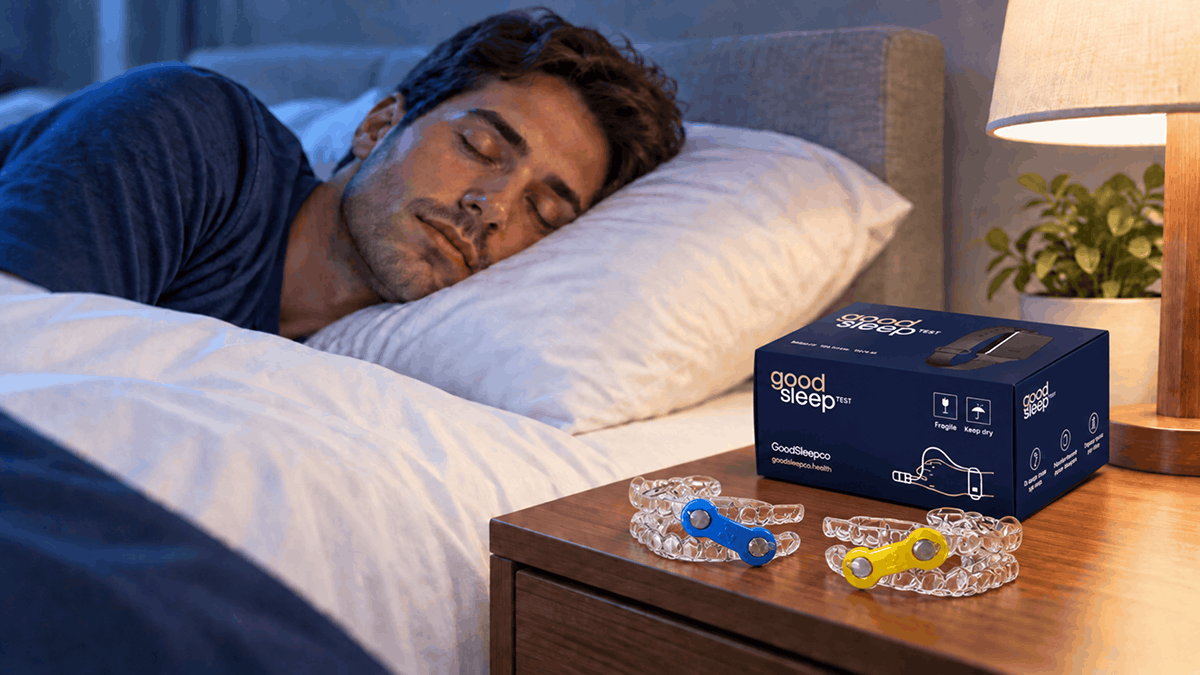
If loud snoring, waking up gasping, or daytime tiredness has you wondering about sleep apnea, a sleep lab may feel like a big first step. In some cases, you can start with a physician-supervised home sleep apnea test instead.
But skipping the lab is not the same as skipping a sleep test. To get a sleep apnea mouth guard safely, you still need a proper evaluation, a confirmed diagnosis, and professional guidance. For many adults, a home test may offer a more convenient starting point. The American Academy of Sleep Medicine (AASM) recommends home sleep apnea testing for some adults with symptoms that suggest obstructive sleep apnea, provided a qualified clinician oversees the process.
Sometimes, yes. Without a sleep test and medical evaluation, no.
A sleep apnea mouth guard cannot confirm that you have obstructive sleep apnea or show how severe it is. A clinician needs to review your health and appropriate test results before recommending treatment.
For some adults, a home sleep apnea test can help avoid an overnight stay in a sleep lab. It records a limited set of breathing-related signals while you sleep at home. It does not collect all the same information as an in-lab study, so it is not right for everyone. AASM guidance explains who may be suited to home testing and when a lab-based polysomnogram is preferred.

Share what you have noticed, such as loud snoring, witnessed breathing pauses, gasping during sleep, or daytime sleepiness. A clinician can assess whether sleep apnea is a possibility and whether home testing is a suitable next step.
A home test is generally meant for adults who may have obstructive sleep apnea and do not have certain complicating health concerns. AASM recommends an in-lab sleep study instead for people with conditions such as significant heart or lung disease, suspected sleep-related hypoventilation, chronic opioid use, a history of stroke, or severe insomnia. Review the AASM diagnostic testing guideline.
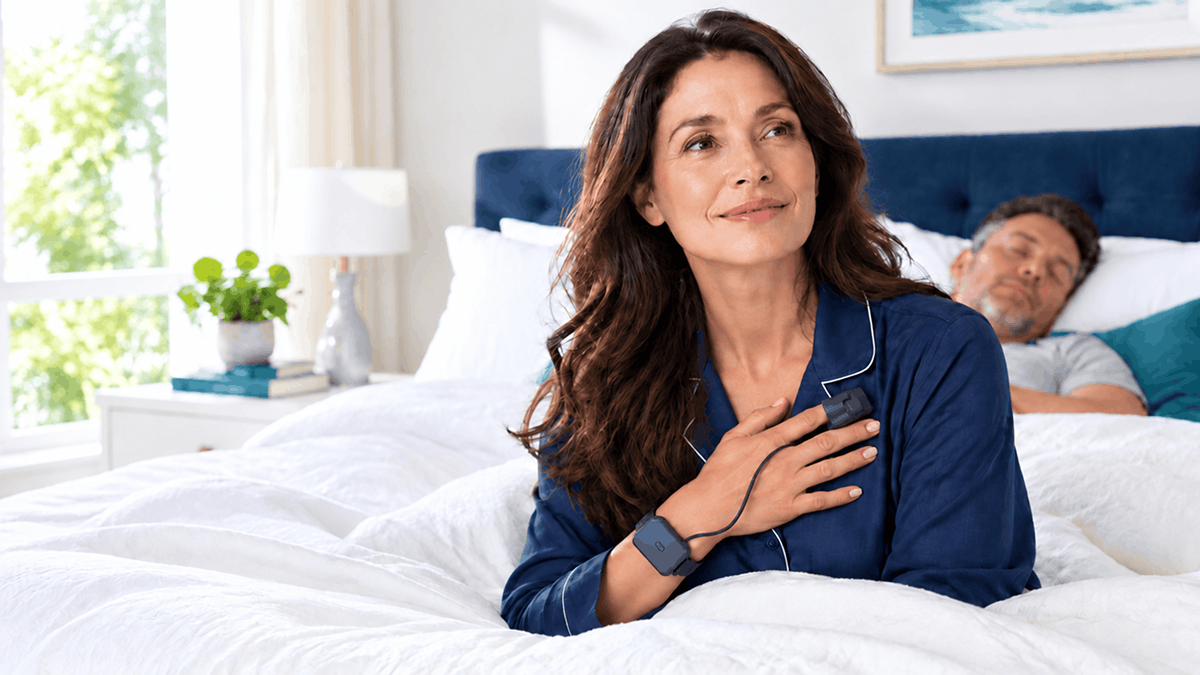
If your clinician recommends home testing, you’ll use a device overnight at home and return it as directed. Dentulu’s sleep apnea program describes an at-home finger-sensor test reviewed by sleep doctors. Its internally confirmed test price is $159; ask about coverage and any additional costs before you begin. See Dentulu’s sleep apnea service information.

A sleep professional needs to interpret the test and confirm the diagnosis. A home test can miss sleep apnea or underestimate its severity because it collects less information than an in-lab study. It may also record time in bed rather than actual sleep time.
If your result is negative or unclear but your symptoms still point to sleep apnea, ask the clinician what to do next. AASM recommends an in-lab sleep study after a negative, inconclusive, or technically inadequate home test when sleep apnea remains a concern. AASM diagnostic testing guideline
A Generic MAD is a custom oral appliance designed to hold the lower jaw slightly forward during sleep. This position may help keep the airway open for some people with obstructive sleep apnea.
A Generic MAD is not a one-size-fits-all fix. A qualified dentist should assess your teeth, bite, gums, and jaw before fitting an oral appliance. AASM recommends a custom, titratable oral appliance fitted by a qualified dentist when oral appliance therapy is prescribed for adults with sleep apnea. Read the AASM and American Academy of Dental Sleep Medicine guideline.
Feeling better or snoring less does not prove that sleep apnea is controlled. Your care team may recommend follow-up sleep testing while you use the appliance, then adjust your treatment based on the results. AASM recommends follow-up testing to assess response to non-PAP treatments, including oral appliances.
A home test is convenient, but it is not a replacement for every sleep study. An in-lab test may be the right choice if your health history makes home testing unsuitable, or if a home test does not give a clear answer.
A lab study may also be needed when symptoms remain concerning despite a negative home result. The useful next step is not to guess or buy a device on your own. Ask your clinician whether you need another test or a different evaluation.
Not always. Treatment depends on your diagnosis, severity, health history, and preferences. For severe obstructive sleep apnea, CPAP is usually the first treatment considered because it is generally more effective at reducing breathing events. A custom Generic MAD may be considered when CPAP is not tolerated or is declined, but that decision belongs with your clinician. AASM oral appliance guidance
An over-the-counter sports mouth guard or boil-and-bite snoring device is not the same as a professionally fitted, titratable Generic MAD. Do not rely on an unprescribed mouth guard to diagnose or treat sleep apnea.
Dentulu offers an at-home sleep testing pathway for people who may be eligible. The service information describes physician review and follow-up to discuss results and options. A home test still requires medical oversight, and an oral appliance is not appropriate for everyone.
Start with Dentulu’s home sleep study information or learn about the sleep apnea oral appliance pathway. If you have questions about the process, you can also contact Dentulu.

You may find devices for sale online, but buying one does not confirm that you have sleep apnea or that the device is appropriate for you. For treatment of diagnosed obstructive sleep apnea, medical evaluation and professional guidance matter. A custom Generic MAD should be fitted and monitored by a qualified dental professional. AASM oral appliance guideline
No. A home test collects fewer signals than a lab-based polysomnogram. It can be a useful option for some adults, but it may miss sleep apnea or underestimate its severity. Your clinician can determine which test fits your situation. AASM diagnostic testing guideline
Ask your clinician about next steps. When sleep apnea is still suspected after a negative, inconclusive, or inadequate home test, AASM recommends an in-lab sleep study rather than treating the home result as a definitive rule-out. AASM diagnostic testing guideline
It may be considered in some cases, such as when CPAP is not tolerated or is declined, but severe sleep apnea usually calls for CPAP as the first treatment option. Discuss your results and options with your clinician before choosing a device. AASM oral appliance guideline
Yes. Your care team may recommend follow-up testing to check whether the appliance is controlling sleep apnea, along with dental visits to assess fit and oral health. AASM follow-up testing guidance
You may be able to avoid a sleep lab, but you should not skip diagnosis or medical guidance. Ask a clinician whether a home sleep apnea test is appropriate for you. If the results confirm sleep apnea, you can discuss whether CPAP, a custom Generic MAD, or another treatment makes sense for your needs.
Meta title: How to get a sleep apnea mouth guard without a sleep lab
Meta description: Snoring or daytime fatigue? Learn how a physician-supervised home sleep test may help you explore a sleep apnea mouth guard without a sleep lab.

 Patient Subscription
 Dental Professionals
 Vendors