Waking up tired, hearing that you snore loudly, or noticing pauses in your breathing can leave you wondering what to do next. A virtual dental conversation can help you discuss your concerns and understand possible next steps, but it does not diagnose sleep apnea. Diagnosis requires evaluation by a qualified medical professional.
Dentulu’s current process combines a virtual dental consultation, a home sleep apnea test interpreted by sleep physicians, and in-person dental care when an oral appliance may be appropriate. Here’s how the pieces fit together, and what to know about treatment options.
Sleep apnea is a condition in which breathing repeatedly stops or becomes shallow during sleep. The National Heart, Lung, and Blood Institute (NHLBI) describes several types, including obstructive sleep apnea, which involves a blocked airway, and central sleep apnea, which occurs when the brain does not send the signals needed to breathe. Some people have a combination of the two.
A bed partner may notice loud snoring, choking, or gasping. You might also wake feeling unrefreshed or feel sleepy during the day. These signs can be useful to share with a clinician, but symptoms alone cannot confirm sleep apnea. A medical evaluation is needed to determine what is causing them and what care may help. (NHLBI)

Sleep apnea can affect more than how rested you feel. It may be associated with other health concerns, so it’s important to discuss possible symptoms with a healthcare professional rather than relying on a device or online information to diagnose yourself. The NHLBI’s sleep apnea overview explains the condition, its diagnosis, and available treatment approaches.
If you suspect sleep apnea, write down what you’ve noticed, for example, snoring, disrupted sleep, or daytime sleepiness. If someone shares your bedroom, their observations may help you describe the pattern. Then ask a healthcare professional what kind of evaluation makes sense.
Treatment depends on the type and severity of sleep apnea, your health, and the findings of your medical evaluation. Options may include:
CPAP and an oral appliance are not interchangeable choices for everyone. Your sleep physician and dentist can help you understand which options may fit your diagnosis, needs, and preferences.
Teledentistry can make it easier to start a conversation and coordinate care. It does not replace a sleep evaluation, provide a sleep apnea diagnosis, or remove the need for an in-person dental visit when an oral appliance is being considered.
Here’s how the current Dentulu pathway works:
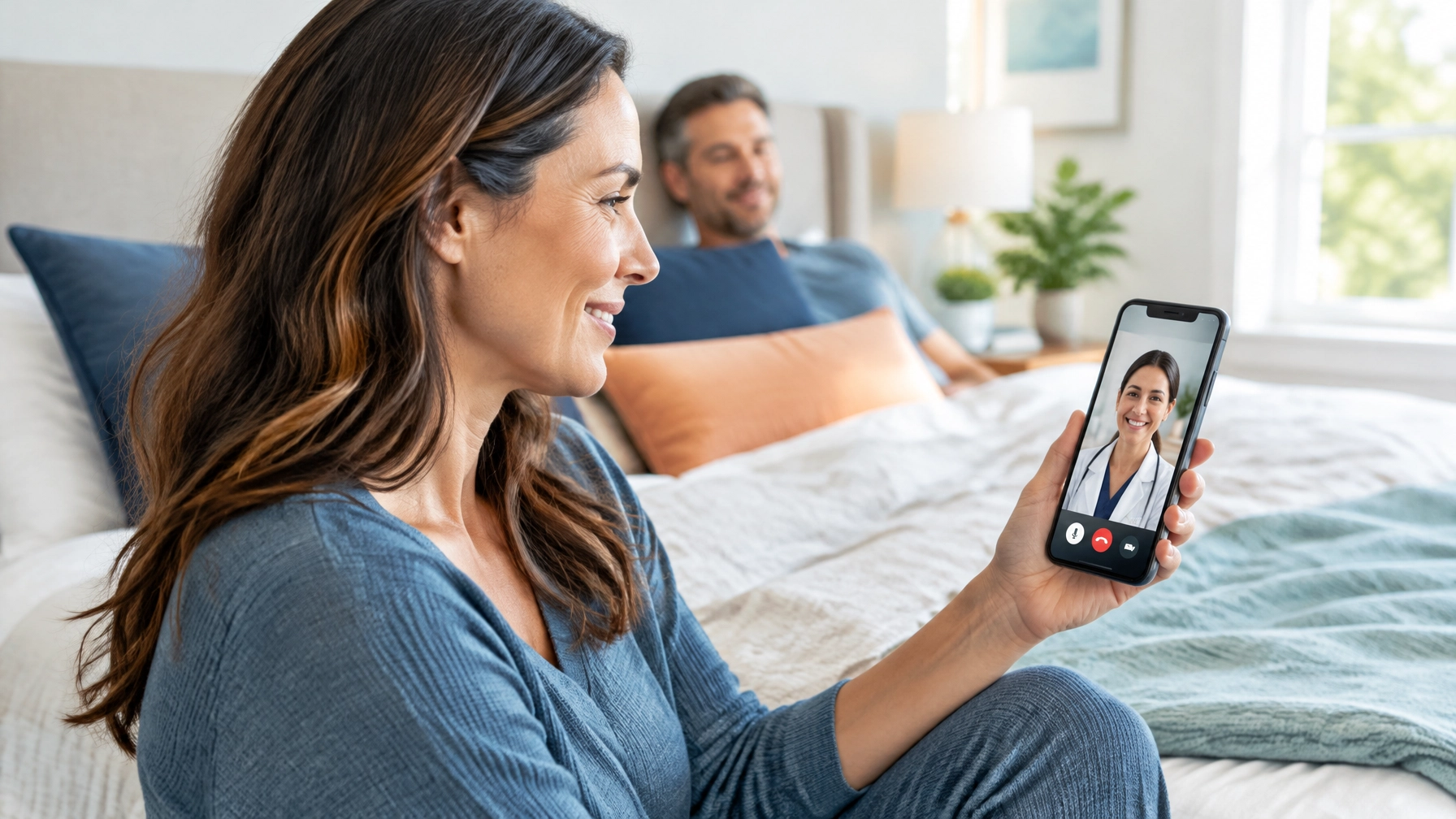
Meet with a licensed dentist by video or share photos through Dentulu’s virtual care platform. You can discuss snoring, symptoms, and relevant risk factors, and ask what steps to consider. This conversation is a starting point, not a sleep apnea diagnosis.
If a home test is appropriate, a one-night finger-sensor test is delivered to your home. You use it as instructed, then the results are interpreted by sleep physicians. This is the diagnostic step in the process; a teledentistry consultation alone cannot confirm sleep apnea. Learn more about the Dentulu home sleep study.
If oral appliance therapy may be appropriate, you visit a credentialed Dentulu network dentist for a comprehensive oral evaluation. The dentist assesses your mouth and takes a precision digital intraoral scan chairside.
To be clear: Dentulu does not provide at-home impression kits or mail-order appliances. A Generic MAD is selected, fitted, and managed with an in-person dentist. The digital scan is taken at the dental office, not made at home and mailed in. (Dentulu sleep apnea care)

The dentist selects a best-fit Generic MAD based on your anatomy, the available clinical information, and your preferences. The appliance is delivered and fitted in person at the dental office. Your dentist shows you how to insert and remove it and how to clean it. Oral appliance therapy requires dental oversight; fit matters, and an appliance may need adjustment. (Review of oral appliance therapy)
Your dentist directs any gradual titration, the process of adjusting the appliance over time, and follow-up care. Dentulu’s workflow includes two to three scheduled visits for adjustment and ongoing monitoring through the platform. Relevant outcomes are reported back to the referring physician. The exact plan depends on your clinical needs.
If you need hands-on treatment or specialist care beyond this pathway, Dentulu can coordinate a referral to a local dental office or specialist.
A mail-in impression kit is not Dentulu’s current workflow. For oral appliance therapy, the patient first has an in-person dental evaluation, followed by a chairside digital scan. The dentist then fits the appliance and guides any adjustments.
This matters because comfort and effectiveness depend on more than receiving a device in the mail. The dentist needs to evaluate fit, provide instructions, and manage follow-up. If you read older Dentulu material describing at-home impressions, that description does not reflect the current process. For details, see Dentulu’s sleep apnea care information.
Keep a simple record of what you or a bed partner notice during sleep, and note how you feel during the day. Bring that information to your healthcare professional. You can also ask:
These questions help you understand the next step without having to choose a treatment before you have a diagnosis.
No. A virtual dental consultation can help you discuss symptoms and care options, but it does not diagnose sleep apnea. In Dentulu’s workflow, a home sleep test is interpreted by sleep physicians. (Dentulu home sleep study; NHLBI)
No. Dentulu does not use at-home impression kits or mail-order appliances for this pathway. If a Generic MAD may be appropriate, you see a credentialed network dentist in person for an evaluation and chairside digital scan. (Dentulu sleep apnea care)
No. An oral appliance is not suitable for every person or every diagnosis. Your sleep physician’s evaluation and an in-person dental assessment help determine whether it may be an option for you. (NHLBI; review of oral appliance therapy)
No. CPAP uses a machine and mask to deliver air pressure, while a Generic MAD is an oral appliance fitted by a dentist. Your care team can explain which treatment options fit your diagnosis and circumstances. (NHLBI; review of oral appliance therapy)
Talk with a healthcare professional about your symptoms and ask whether a sleep evaluation is appropriate. Dentulu’s virtual dental consultation can help you discuss next steps, while diagnosis and treatment planning require the appropriate medical and in-person dental care.

 Patient Subscription
 Dental Professionals
 Vendors