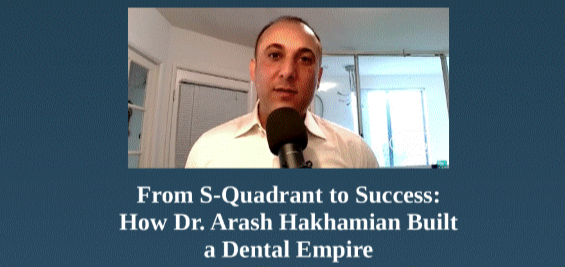
What happens when a young dentist gets mentored by the author of Rich Dad Poor Dad? This conversation featured Dr. Arash in discussion with hosts Dr. Kyle Stanley, Dr. Christian Coachman, and Dr. Ingrid Berglund. In Dr. Arash Hakhamian’s case, it sparked a transformation from Beverly Hills associate to multi-practice owner, dental tech investor, and pioneer in preventative oral health all while stepping away from clinical practice five years ago.
Listen to the full episode: YouTube Link
Fresh out of dental school and working in Beverly Hills with celebrity dentists, Dr. Arash thought he’d arrived. Then came a serendipitous dinner with Robert Kiyosaki, author of Rich Dad Poor Dad.
Kiyosaki didn’t mince words: “This is not where you want to be. You need to get out of Beverly Hills.”
He introduced Dr.Arash to his famous quadrant model, which divides people into four categories: Employee (E), Self-Employed (S), Business Owner (B), and Investor (I). The revelation? Most dentists, despite owning their practices, are stuck in the worst possible position the S quadrant.
The quadrant model reveals a harsh truth about dental practice ownership:
Employee (E): Associates working for someone else. You clock in, clock out, limited responsibility beyond showing up.
Self-Employed (S): Solo practice owners who ARE their practice. Patients request you specifically. When you leave for two weeks, revenue stops. You’re doing all the work with all the risk.
Business Owner (B): Practices run by systems and associates. The litmus test? Can you leave for two months and return to find it performing better than when you left?
Investor (I): Your money works for you. You invest in others’ businesses and leverage their hard work.
“Self-employed is even worse than being an employee,” Dr. Arash explains. “You get all the difficulties and challenges of running a business, all the risks, all the sleepless hours—but less time to actually invest and grow wealth.”
Three weeks after that dinner, Dr. Arash made his move. Finding a struggling practice on Craigslist he discovered a practice listed for $250,000 in a city he’d never heard of.
He negotiated the price down to $50,000. He didn’t have $50,000. So the seller carried $20,000 of the financing. Dr. Arash scraped together $30,000 and bought his first practice.
Two years later, he sold it for $2 million.
The transformation from zero to $200,000 monthly production didn’t happen by luck. It happened through relentless hustle that most dentists would find unthinkable.
Dr. Arash’s early days redefine what “working hard” means:
But here’s what separated him from dentists who burn out: mindset.
“I remember nights leaving at 10:30, completely spent,” he recalls. “I was either going to cry, but instead s weird as it sounds I would laugh to myself and say, ‘This is what it takes. You’re going in the right direction. This is the type of effort that success requires.'”
After attending Howard Farran’s lecture, Dr. Arash received advice that would prove transformational: hire a female office manager between 30 and 45.
When he found Mary Gonzalez, his approach to the “interview” was unconventional. He told her to get in his car, drove her around the area, and laid out his entire vision.
“You’ve been in dentistry for 35 years. I’ve been in dentistry for one and a half,” he told her. “I don’t need to interview you. But I promise you this: if you stick with me, we will grow together, and I will make sure you have a way to retire.”
This leadership move showing vulnerability while demonstrating ambition and sharing the vision of mutual growth became the foundation for everything that followed. Mary became his “rock,” enabling him to leave for months at a time while the practice continued to thrive.
Dr. Arash emphasizes the concept of “the first believer and the second believer.” Until you have those two people validating your vision and building culture with you, “you’re just the crazy guy.” But once you have them, you can create a movement.
What stands out about Dr. Arash’s journey isn’t just the information he gathered, it’s what he did with it. Throughout the conversation, he mentions multiple mentors:
But here’s the difference: he immediately implemented what he learned.
“The amount of people that learn something and say ‘this is amazing’ and do nothing about it—that’s 95% of people,” notes the podcast hosts. “Less than 5% actually act on it.”
Dr. Arash was in the 5%. He attended Ed Zuckerberg’s social media marketing course and immediately invested his $100 credit into Facebook advertising when the platform was just gaining traction. He ordered $80,000 worth of implant equipment early in his career, which immediately got the company’s attention and led to all-expenses-paid trips to Korea and unlimited CE courses.
During the conversation, the hosts point out that Dr.Arash embodies principles from The Four Agreements:
“As dentists, we’re trained to be risk-averse,” Dr. Arash explains. “It’s totally the wrong mentality. With certain things you want to be risk-averse like if you’re placing an implant near a nerve. But if you’re going to take risks, take them early so you have time to recover.”
After successfully transitioning from the S to B quadrant, Dr. Arash began focusing on the I quadrant investing. But his approach to investing was unique: he became a “conference junkie,” attending every dental convention and walking booth to booth.
Perhaps most exciting is where Dr. Arash’s focus has shifted: preventative dentistry backed by cutting-edge science.
“If your dentist doesn’t check your salivary microbiome, get a new dentist,” he states boldly.
His current work involves three groundbreaking companies:
Primal Health (Chief Dental Officer)
A Minnesota-based company that has discovered how to naturally stop sugar metabolism in cariogenic bacteria. The result? No acid production, which means preventing cavities at the source. The byproduct also helps with periodontal health and yeast infections, showing a 98% reduction in red complex periopathogens. Used by NASA, this technology comes in a simple mint form.
GreenMark Bio
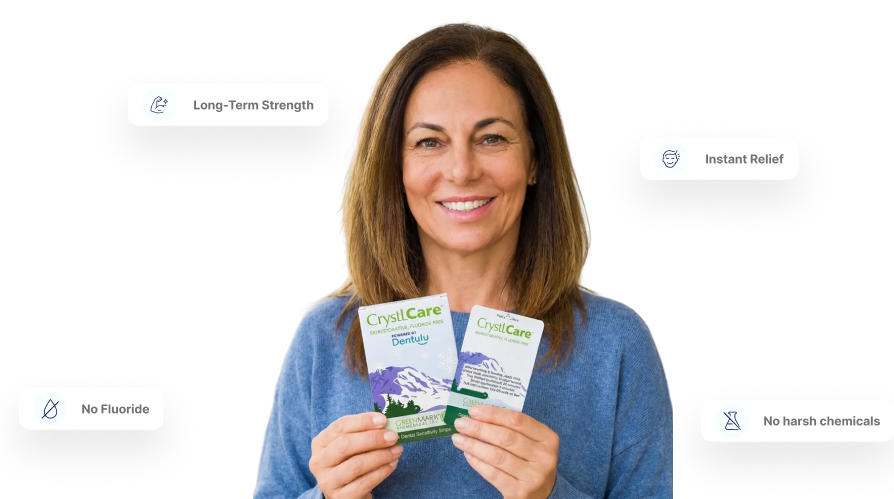
Using nano starch particles to deliver minerals deep into dentinal tubules and enamel, this technology can reverse cavities, not just prevent them. It immediately occludes open tubules, eliminating sensitivity.
PerioProtect + BitSense
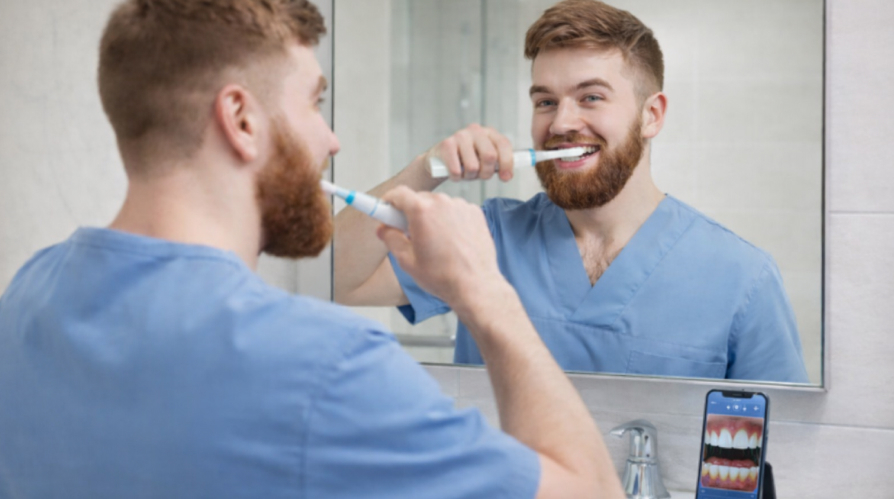
Custom periodontal trays for remineralization, combined with miniaturized sensors in oral appliances that detect grinding, monitor night guard compliance, and measure blood oxygen saturation levels to identify sleep apnea and other airway issues.
With these technologies, Dr. Arash offers patients a 100% guarantee: follow his protocols, come in three times a year, and if you get cavities, he’ll fix them for free. If incipient lesions develop, he’ll reverse them.
As podcast host Dr. Christian Coachman points out, 99% of dentistry today is reactive fixing problems after they’ve already occurred.
“We’re very proud of being great reactive dentists, fixing problems after they already happened,” he observes. “The best prosthodontist, the best surgeon, the best orthodontist we’re all fixing problems that are already there. We missed the point because many times we’re seeing this patient for 5-10 years, and we’re proud of placing an implant on them. This is a disaster. Nobody talks about it.”
Dr. Arash is pioneering the shift from reactive to proactive dentistry using technology to prevent disease rather than just treating it after the fact.
Owning a practice doesn’t mean you own a business. If the practice can’t run without you for two months, you’re self-employed, not a business owner. Build systems, hire associates, and create a practice that thrives in your absence.
Let them call you a weekend warrior. Put pride aside and do whatever it takes whether that’s passing out flyers, setting up outside supermarkets, or working holidays while others vacation.
Information is worthless without implementation. When you learn something valuable, act on it immediately. Be impeccable with your word if you say you’re going to do something, do it.
You can’t build alone. Find those two key people who will validate your vision and build culture with you. Show vulnerability, share your vision of mutual growth, and invest in their future.
Fail when you have nothing to lose. When you’re young, unknown, and unattached. The best time to take big swings is when the downside is minimal and the time to recover is maximum.
Don’t just ask “What do I need to buy?” Ask “Where’s the investment opportunity?” Spend weekends listening to company pitches. Invest your time in exchange for equity. Learn about new financial instruments even if it’s through daily ChatGPT conversations on your commute.
The future of dentistry isn’t bigger crowns or more implants it’s preventing the need for them in the first place. Invest time in understanding oral microbiome, remineralization technology, and systemic health connections. Check salivary biomarkers, address root causes, and guarantee outcomes.
Final Thoughts
This podcast offers meaningful insights into dentistry as both a profession and a journey. Through discussions on entrepreneurship, leadership, preventive care, and intentional risk-taking, Dr. Arash Hakhamian encourages dentists to think holistically about success.
Dentistry continues to evolve, and conversations like this highlight the importance of adaptability, clarity, and purpose in shaping fulfilling and sustainable careers.

 Patient Subscription
 Dental Professionals
 Vendors