
Tooth sensitivity is a common difficulty that affects millions of adults. Whether triggered by hot coffee, cold ice cream, or recent cosmetic treatments, sensitive teeth can alter how individuals approach daily oral hygiene.
Understanding the underlying causes of tooth sensitivity is essential for selecting appropriate comfort-focused care products and knowing when to consult a dental professional.
What Causes Tooth Sensitivity?
Tooth sensitivity typically occurs when the protective outer layer of enamel thins out or when gum tissue recedes, exposing the underlying dentin. Dentin contains microscopic tubules that lead directly to the tooth’s nerve center (the pulp). When cold, hot, sweet, or acidic triggers contact exposed dentin, they stimulate nerve responses, leading to temporary discomfort.
Common factors contributing to localized sensitivity include:
What Are Fluoride-Free Sensitivity Strips?
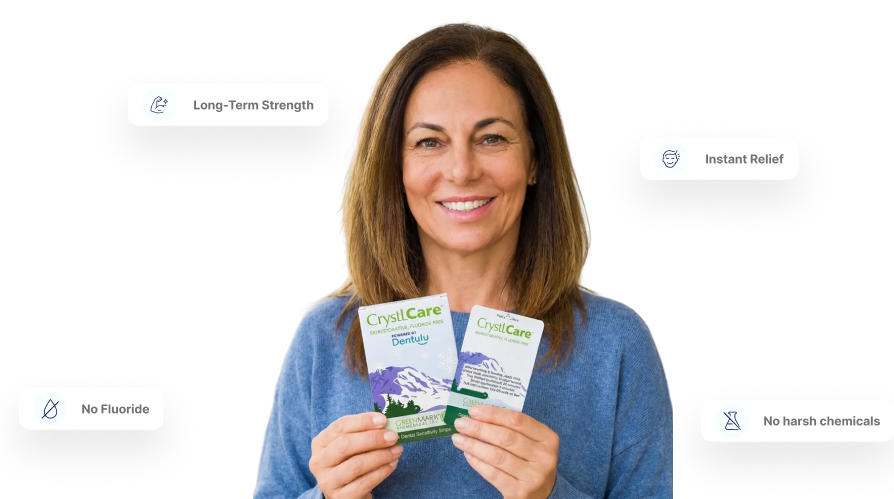
Over-the-counter sensitivity strips such as CrystLCare™ Biorestorative Fluoride-Free Dental Strips are targeted oral care products designed to deliver localized soothing ingredients directly to specific teeth.
Unlike daily toothpaste or oral rinses intended for full-mouth use, sensitivity strips are structured for as-needed, targeted application.
Key Characteristics of Targeted Strips:
Sensitivity-Conscious Use Cases
Targeted sensitivity strips can serve as a supportive adjunct in several practical scenarios:
Cosmetic teeth whitening is a popular goal, but temporary sensitivity can be a drawback. Some individuals choose to apply sensitivity-focused products in the days leading up to a whitening session to help comfort sensitive areas prior to peroxide exposure.
Following a professional or home whitening procedure, temporary sensitivity may linger for 24 to 48 hours. Applying targeted strips post-treatment can help cushion sensitive spots while enamel stabilizes.
For individuals with localized enamel wear due to past aggressive brushing, applying strips on specific teeth offers a targeted approach without requiring a change to their overall daily hygiene product routine.
How to Maintain a Balanced Oral Health Routine
Targeted products like sensitivity strips complement but do not replace core preventive oral care habits:
Conclusion: A Mindful Approach to Tooth Sensitivity
Managing localized sensitivity works best through a combination of gentle daily hygiene habits, routine professional guidance, and thoughtful adjunct care. Products like CrystLCare™ Fluoride-Free Dental Strips offer a targeted, non-daily option for individuals seeking extra comfort around whitening treatments or localized areas of enamel wear.
If tooth sensitivity is severe, persistent, or accompanied by localized pain, schedule a consultation with a licensed dentist to identify and address the underlying cause.

 Patient Subscription
 Dental Professionals
 Vendors