
Noticing that your teeth look longer or that the gum line seems to be changing can be unsettling. The honest answer is that gum tissue that has already receded does not grow back on its own. But you can take steps to help slow further recession, protect exposed roots and find out whether treatment is needed. Cleveland Clinic explains that recession cannot be reversed, though care can help keep it from getting worse.
Gum recession happens when gum tissue pulls away from a tooth and exposes more of its root. The crown of a tooth is covered by enamel, but the root is covered by cementum, which is less protective. An exposed root can be more vulnerable to decay and may feel sensitive to temperature, sweets or brushing. (Cleveland Clinic; Imber and Kasaj, International Dental Journal)

Gum recession may be subtle, especially when it develops slowly. Possible signs include:
Sensitivity and longer-looking teeth can have other causes, too. A dentist can examine the area to help identify what is happening. (Cleveland Clinic; NIDCR; Imber and Kasaj)
There is not always one clear cause. Recession can have several contributing factors, and it does not automatically mean you have poor oral hygiene.
Common causes and risk factors include:
Home care cannot replace gum tissue that has already been lost. It can, however, help protect the gum line, limit plaque buildup and reduce avoidable irritation. Try these steps while arranging an exam if you have noticed a change.
No toothpaste, rinse, oil, vitamin, supplement or at-home device regrows gum tissue that has receded. Desensitizing products may help with nerve sensitivity, but they do not rebuild the gum line. Be cautious of products or routines marketed as “gum growth” solutions: the realistic goal is to protect the exposed root and prevent further damage. A dentist or periodontist can discuss whether root coverage is an option. (Cleveland Clinic; Imber and Kasaj)
Receding gums treatment depends on what is causing the change. A dental exam can show whether you have recession, gum disease, tooth wear or another issue. A dentist may:
A gum graft is a surgical procedure intended to cover an exposed root and help prevent further recession. It can be an option for suitable cases, but it involves surgery and a recovery period. Whether it is right for you depends on the tooth, the amount of recession and your overall gum health. (NIDCR; Cleveland Clinic; ADA)
Schedule a dental visit if you notice gum changes, bleeding, persistent sensitivity or pain. Seek prompt care for loose or shifting teeth, a fast change in one area, a lump, an ulcer or signs that concern you. (ADA MouthHealthy; NHS)
For swelling with fever, spreading facial swelling, pus, or a knocked-out or broken tooth, seek urgent dental care. Do not wait for a routine appointment if symptoms are worsening. (NHS)
A photo-based or video consultation can help you talk through what you have noticed, review your brushing routine and products, and triage whether you should seek prompt in-office care. A clinician may also help consider whether the appearance could involve gum recession, tooth abrasion or signs of gum disease.
But recession cannot be measured or diagnosed over video. A hands-on exam is needed for probing, and X-rays may be needed to assess supporting bone. If you need those checks or a surgical opinion, a virtual dental consultation can help you plan a referral to a local dentist or periodontist.
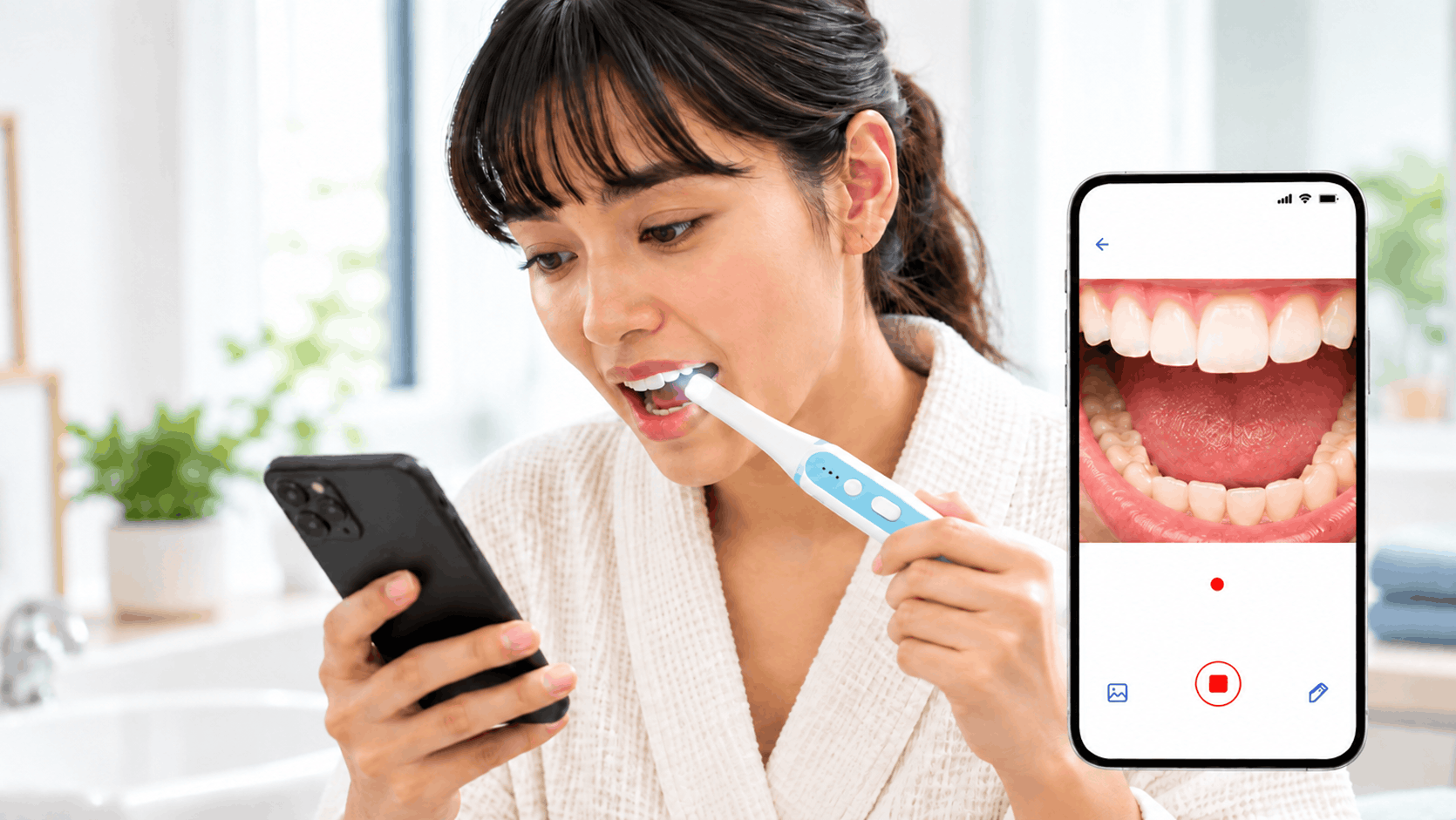
Dentulu’s MouthCAM can help you take photos of your gum line over time so you have images to share and compare at a dental visit. If gum disease is a concern, a salivary testing kit may be one optional source of information, but it does not replace an exam or diagnose recession. Read more about what an oral microbiome test can and cannot tell you.

No. Gum tissue that has receded does not grow back on its own. You can work to prevent further recession and protect the exposed root; a dentist or periodontist can discuss surgical root coverage when appropriate. (Cleveland Clinic; ADA)
No. Brushing technique can contribute, but plaque-related inflammation, tobacco, tooth position, piercings and naturally thin gum tissue may also play a role. Recession is often multifactorial. (Cleveland Clinic; Imber and Kasaj)
It may help ease sensitivity, but it will not rebuild gum tissue or cover an exposed root. Ask a dental professional if sensitivity continues or worsens. (Cleveland Clinic)
Not necessarily. Some people may be monitored or offered other care, such as bonding. A periodontist can assess the area and explain whether surgery could help with root coverage in your case. (Cleveland Clinic; Imber and Kasaj)

 Patient Subscription
 Dental Professionals
 Vendors