If you’re looking for ways to understand your oral health and systemic health, a saliva test may sound like a shortcut to answers about your whole body. But can an oral microbiome test tell you whether you have, or will develop, heart disease or diabetes?
No, not directly. An oral microbiome test can identify selected bacteria or markers in a mouth sample. It cannot diagnose or predict heart disease, diabetes, or another systemic disease. Research has found associations between gum disease and these conditions, but an association is not proof of cause, and it does not make a saliva test a medical screening test. (American Heart Association scientific statement; American Dental Association: Oral-Systemic Health)
Your oral microbiome is the community of microorganisms living in your mouth. It includes bacteria, fungi, viruses, and other microbes. Some can contribute to oral disease; many others are part of the normal microbial community. Their balance and interactions are complex, and the microbes found on your teeth, tongue, and gums can differ by location. (NIDCR: Exploring the Mouth’s Microbial Wonders)
A saliva sample offers information about selected microbes present in the sample. It does not provide a complete map of every microbial community or show exactly what is happening at every tooth or gum site. Research on saliva testing also uses different collection and analysis methods, which can make findings harder to compare. (peer-reviewed review: Saliva assay, A call for methodological standardization)
Studies have reported an association between periodontal disease, also called gum disease, and atherosclerotic vascular disease, which affects the arteries. In its scientific statement, the American Heart Association concluded that observational studies support an association, but do not establish that gum disease causes heart disease. Gum disease and cardiovascular disease also share risk factors, including smoking, age, and diabetes. (AHA scientific statement, indexed on PubMed)
That distinction matters. If you search for oral bacteria and heart disease, you may find studies examining possible links between oral microbes, inflammation, and cardiovascular conditions. Those studies do not show that finding a particular bacterium in saliva means you have heart disease or will develop it. The ADA likewise cautions that associations between oral and systemic conditions do not by themselves prove cause and effect. (ADA: Oral-Systemic Health)

The relationship between diabetes and gum disease is often described as bidirectional. In plain language, diabetes can make gum problems more likely or harder to manage, while gum disease may make blood sugar harder to control. The National Institute of Dental and Craniofacial Research and the American Dental Association describe this two-way relationship. (NIDCR: Diabetes & Oral Health; ADA: Diabetes)
This connection is a reason to tell both your dentist and physician about relevant health conditions. It is not evidence that a saliva test can detect diabetes or determine your blood sugar. The CDC describes A1C as a blood test used to diagnose prediabetes and diabetes and assess average blood sugar over time. (CDC: A1C Test for Diabetes and Prediabetes)
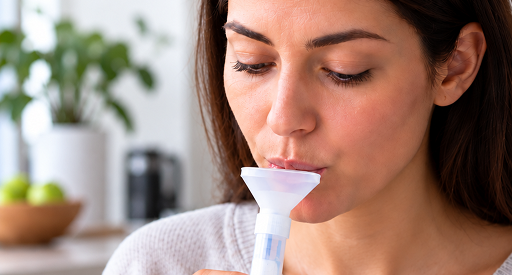
The answer depends on the test panel. A dental-focused test may analyze a saliva sample for selected bacteria or other markers associated with gum disease or cavities. Dentulu’s salivary testing kits are intended to provide information about oral bacteria and support a dental conversation.
A test result describes what its panel looked for in the sample. It is not, on its own, a diagnosis. A dentist may assess your gums and teeth in person, measure the spaces around your teeth, review your symptoms, and use X-rays when appropriate. (NIDCR: Periodontal (Gum) Disease)

No. An oral microbiome or saliva test does not predict, diagnose, or rule out heart disease or diabetes. Finding a bacterium associated with gum disease is not evidence that you have a cardiovascular condition or a blood sugar disorder.
Research into connections between oral health and systemic health is ongoing. But the AHA statement does not establish that periodontal disease causes atherosclerotic vascular disease, and the ADA notes that an association alone cannot establish causation. (AHA scientific statement; ADA: Oral-Systemic Health)
Use a saliva test as an oral-health awareness tool, not as a shortcut around medical screening. If you have concerns about your heart or blood sugar, talk with a physician about appropriate evaluation. For diabetes screening, that may include a blood test such as A1C. (CDC: A1C Test)
| A saliva or microbiome test can | It cannot |
|---|---|
| Identify selected bacteria or markers included in its panel | Diagnose or predict heart disease |
| Offer information to discuss with your dentist | Diagnose or predict diabetes or another systemic disease |
| Add context to a conversation about gum or cavity risk | Replace a dental examination |
| Help you decide what oral-health questions to ask | Replace blood tests, medical checkups, or a physician’s evaluation |
Results need context. Different tests look for different targets, and collection and analysis methods vary across research studies. A clinician can help explain what a particular report does, and does not, mean. (peer-reviewed saliva assay review)
Arrange an in-person dental visit if you have red, swollen, tender, or bleeding gums; gums pulling away from your teeth; loose or sensitive teeth; or pain when chewing. These can be signs of gum disease, and a dentist can examine your mouth directly. (CDC: About Periodontal (Gum) Disease; NIDCR: Gum Disease)
Contact a physician if you have blood-sugar concerns or need diabetes screening. A saliva microbiome report cannot substitute for medical evaluation or blood testing. (CDC: A1C Test)
Call 911 for chest pain or possible stroke symptoms. Do not wait for a saliva test or routine appointment. The American Heart Association lists warning signs of heart attack and stroke and advises seeking emergency help. (AHA: Heart Attack Warning Signs; AHA: Heart Attack and Stroke Symptoms)

No. It can identify selected microbes or markers in a saliva sample, but it cannot diagnose or predict heart disease. (AHA scientific statement)
Research shows an association between periodontal disease and atherosclerotic vascular disease, but the AHA statement says the evidence does not establish causation. (AHA scientific statement)
No. A saliva microbiome test is not a diabetes test. The CDC identifies A1C as a blood test used to diagnose prediabetes and diabetes. (CDC: A1C Test)
It can report selected bacteria or markers included in its panel and provide information to discuss with a dental professional. It should be treated as one piece of oral-health context, not a diagnosis. (Dentulu salivary testing kits; peer-reviewed saliva assay review)
Yes. Keep up with medical checkups and ask your physician about symptoms, diabetes screening, or heart-health concerns. A saliva result does not replace your physician’s evaluation or recommended tests. (CDC: A1C Test)
A saliva test can give you information about selected oral bacteria and help you have a more informed conversation with your dentist. It cannot predict heart disease or diabetes. If you’re concerned about your gums, book a dental evaluation; if you’re concerned about blood sugar or heart health, contact your physician. For chest pain or stroke symptoms, call 911.

 Patient Subscription
 Dental Professionals
 Vendors