
Your mouth isn’t sealed off from the rest of your body. Saliva helps keep the mouth moist and supports everyday functions such as swallowing, speaking and eating. It also interacts continuously with the teeth, gums and oral tissues.
Over the past decade, researchers have built a genuinely interesting body of evidence connecting oral bacteria to conditions well outside the mouth, heart disease, Alzheimer’s, and certain cancers among them. This is real, active research. It’s also easy to overstate, and a lot of what circulates online about “your saliva can detect cancer” goes further than the science currently supports. Here’s what’s actually established, what’s still being worked out, and what a saliva test can honestly tell you today.
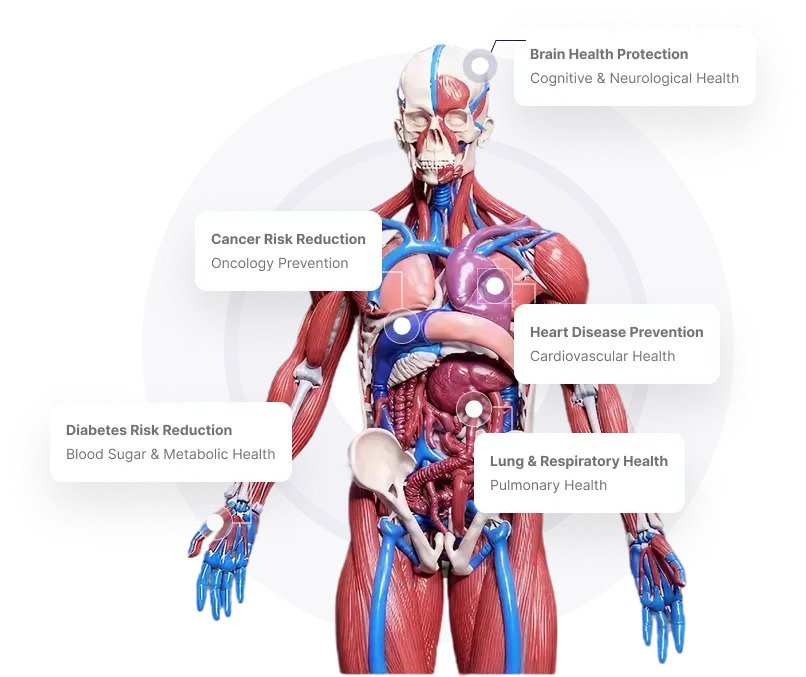
The clearest link is between gum disease and cardiovascular disease. Multiple studies have found that people with periodontal disease have a higher rate of cardiovascular events, and the leading explanation is mechanical: inflamed gums are more permeable, letting oral bacteria enter the bloodstream, where they’ve been found in arterial plaque. This is a well-replicated association, though researchers are still working out how much of it is causal versus shared risk factors like smoking and diabetes.
The Alzheimer’s connection is newer and more preliminary. A widely cited 2019 study published in Science Advances found the bacterium Porphyromonas gingivalis, along with its toxic enzymes, in the brain tissue of deceased Alzheimer’s patients, and showed that orally infecting mice with the bacteria led to brain colonization and increased production of amyloid-beta, a protein associated with Alzheimer’s pathology. That’s a real and interesting mechanistic finding- but it’s evidence of a possible pathway, not proof that gum disease causes Alzheimer’s in humans. The clearest test of that idea came later: a Phase 2/3 drug trial targeting this same bacteria in Alzheimer’s patients did not meet its primary efficacy endpoint in the overall study population. The mouth-brain connection remains an active, unresolved research question, not a settled one.
Periodontal disease has also been associated with elevated risk for several cancers in large epidemiological studies, including research out of Harvard. These are population-level associations from cohort studies – useful for understanding risk factors, but they are not the same thing as a diagnostic test that can detect cancer in an individual person.
None of the research above translates into a validated saliva test you can take today for cancer screening, Alzheimer’s, or heart disease. The American Dental Association’s own guidance is direct about this: as of its most recent review, there is no FDA-approved salivary diagnostic test for periodontal disease or caries risk, and its living clinical guideline recommends against relying on commercial salivary or other adjunctive tests to decide whether a lesion needs further workup for cancer – a clinical exam and biopsy remain the standard. If you’re worried about a specific symptom, that belongs in front of a doctor or dentist, not resolved by a mail-in kit.
Where salivary testing is on solid ground is identifying the presence of specific microorganisms — a genuinely useful, narrower thing than “detecting disease.” Dentulu’s OralDNA testing, for example, uses lab analysis to identify particular periodontal bacteria, cavity-causing bacteria such as Streptococcus mutans and Lactobacillus, and certain inflammatory markers. That information gives a dentist one more data point when assessing your risk for gum disease progression – it’s a useful input to a clinical conversation, not a stand-alone diagnosis of anything, and not a substitute for the cardiovascular, neurological, or cancer screening your physician would order.
Brush regularly with fluoride toothpaste unless your dentist recommends otherwise. Clean between your teeth, stay hydrated, limit frequent sugary foods and drinks, and do not ignore persistent symptoms.
Schedule a dental evaluation for persistent bad breath, bleeding or swollen gums, persistent dry mouth, tooth pain, tooth sensitivity, loose teeth, persistent mouth sores or other unexplained changes in your mouth.
If you have bleeding gums, persistent bad breath, or other symptoms, that’s worth bringing to your dentist regardless of what any test does or doesn’t show – those are reasons to be seen, not just data points. And if a family history of heart disease, Alzheimer’s, or cancer has you thinking about prevention, that conversation belongs with your physician, informed by the real risk factors they can assess, not a saliva kit standing in for that visit.
Changes in saliva can happen for many reasons, and not every change indicates disease. The important step is to pay attention to persistent symptoms and consider them alongside your overall oral health. Saliva testing may provide additional information in appropriate situations, but it should complement—not replace—professional dental evaluation.

 Patient Subscription
 Dental Professionals
 Vendors