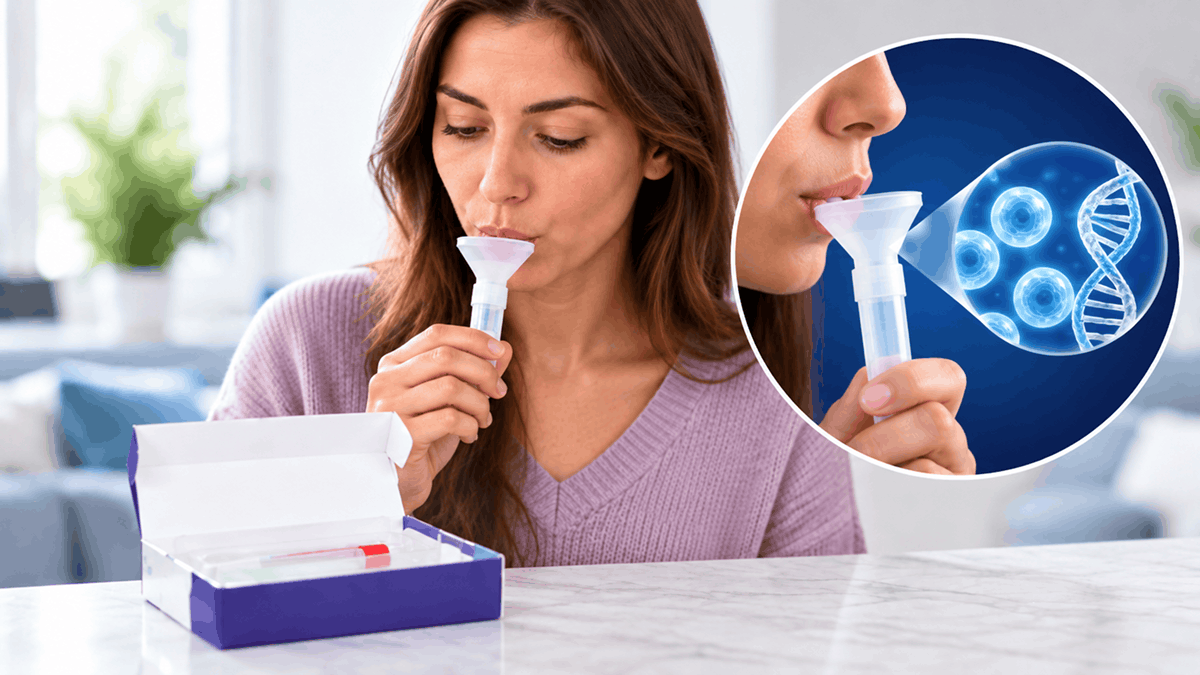
You may have heard that a saliva sample can reveal what is happening in your mouth. That sounds useful, but it can also raise questions: What does an oral microbiome test actually measure? Can it tell you whether you have gum disease or cavities?
The short answer: it can report on selected microbes in your sample. It cannot, by itself, diagnose a dental condition or replace an examination. Knowing that difference can help you use oral microbiome testing as one source of information, not a verdict.
Your oral microbiome is the community of microorganisms that live in your mouth. It includes bacteria, fungi, viruses and other microbes found in places such as your teeth, gums, tongue and saliva. Some microbes are associated with health; shifts in the community can be associated with oral disease. The mouth is also home to many different microbial species, rather than one simple group of “good” or “bad” bacteria. (NIH/NIDCR; review of saliva assay methods)
A test usually examines a sample of saliva or oral rinse for specific organisms or other markers. It does not necessarily survey every microbe in your mouth.
The answer depends on the test. Some panels look for selected bacteria associated with gum disease; others include bacteria associated with tooth decay. For example, Porphyromonas gingivalis, Tannerella forsythia and Treponema denticola are associated with periodontitis. Streptococcus mutans is associated with dental caries, or cavities. These associations do not mean that detecting one organism proves you have a disease. (PLOS ONE study of periodontal bacteria in saliva; systematic review and meta-analysis on S. mutans and caries)
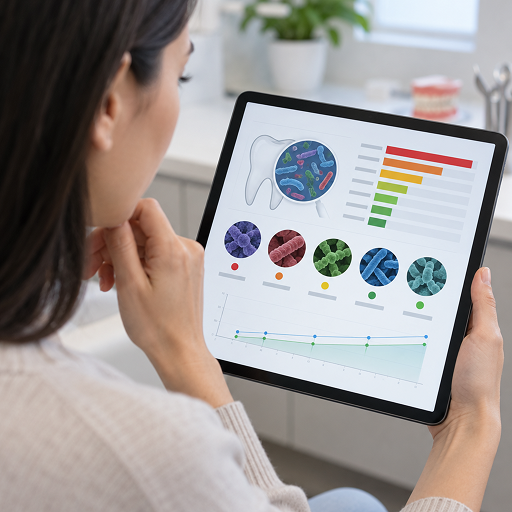
Some tests use qPCR, a laboratory method that detects and measures DNA from specific targets included in the test. A report may list which targets were detected and their levels, or group results into categories such as low, moderate or high. It reports what the test looked for in the sample, not every organism in your mouth. (OralDNA qPCR overview; Dentulu Salivary Testing Kits)
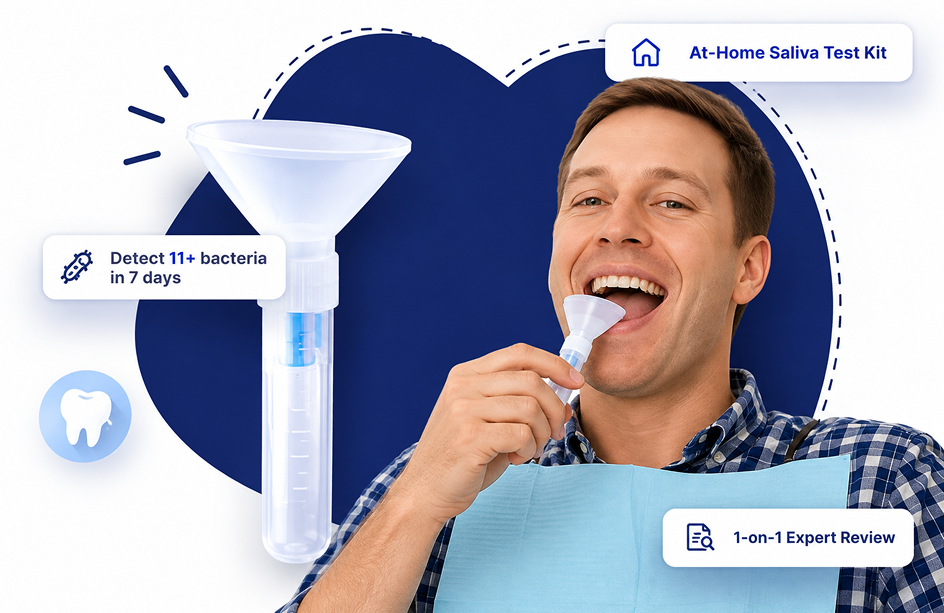
Collection depends on the kit. Dentulu’s OralDNA test page describes collecting an oral-rinse sample at home, returning it to the lab and reviewing the report with a dental professional. Follow the directions supplied with your specific kit, since collection steps can differ between tests. (Dentulu OralDNA Salivary Testing)
For Dentulu’s OralDNA option, results are listed as available in 7–10 business days after the lab receives your sample, with provider review included. (Dentulu Salivary Testing Kits)
An oral microbiome test can tell you whether selected targets were found in your sample and, depending on the test, their measured or reported levels. That information may give you and your dentist another topic to discuss, especially if you have symptoms or risk factors.
Researchers have studied whether saliva-based microbial patterns can help distinguish groups with and without periodontitis. However, study results depend on the sample, test method and people studied. A published review of saliva testing methods found wide variation in how samples were collected and analyzed, making results harder to compare across studies. (PLOS ONE study; review on standardizing saliva assays)
| A result may show… | It does not establish… |
|---|---|
| Whether the test detected the specific microbes on its panel | Whether you have gum disease or a cavity |
| A level or category for certain targets, depending on the report | Where in your mouth a problem is located |
| Information to discuss with your dentist | Whether disease is active, how severe it is, or what treatment you need |
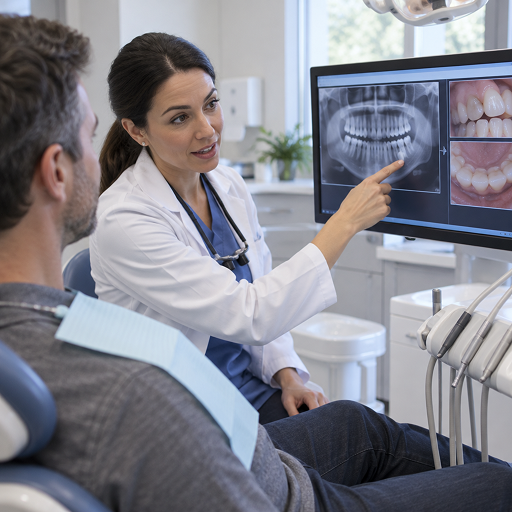
A saliva result is not a stand-alone diagnosis. Dentists assess your gums and teeth directly and may measure gum-pocket depths or use X-rays as part of a clinical evaluation. The British Society of Periodontology notes that salivary testing is not currently recommended as a replacement for professional diagnosis or as a way to predict future gum disease or treatment outcomes. (BSP guidance on oral microbiome testing)
A result also cannot prove that a particular bacterium caused a problem. Gum disease involves the interaction between plaque microbes and your body’s response, and different people can have different microbial communities. A test can detect only the targets its panel includes; methods and collection protocols also vary. (BSP guidance; review of saliva assay methods)
Researchers have found associations between periodontal disease and some systemic health conditions. Association does not prove that one condition causes another. The National Institute of Dental and Craniofacial Research describes the oral-systemic connection as an active area of research, with causes that are not fully understood. The American Heart Association has also reported an association between periodontal disease and atherosclerotic vascular disease, while noting that the evidence does not establish causation. An oral microbiome test cannot tell you that you have, or will develop, heart disease or another systemic condition. (NIDCR: Healthy Mouth, Healthy Body; American Heart Association scientific statement)
You might want to ask a dentist whether testing makes sense if you have bleeding gums, persistent bad breath, a family history of gum problems, diabetes, or a strong interest in preventive care. These are reasons to discuss your oral health, not proof that you need a test. Bleeding gums can be a sign of gum disease, and diabetes is among the risk factors associated with it. (CDC: About Periodontal Disease)
If you have symptoms, prioritize a dental evaluation rather than waiting for a test. A lab report cannot check your teeth and gums in person.
Dentulu’s Salivary Testing Kits are shipped to your home. With the OralDNA option, provider review is included, and you can discuss your report through a virtual dental consultation. If your concern needs hands-on care, a dentist can recommend in-office follow-up. (Dentulu Salivary Testing Kits)
Book a dental appointment if you have recurring bleeding gums, ongoing bad breath, gum swelling, tooth pain or other changes that concern you. The CDC lists red, swollen or bleeding gums among possible signs of periodontal disease. (CDC: About Periodontal Disease)
Seek urgent dental care for significant pain, swelling or a suspected dental infection. If you have trouble breathing or swallowing, seek emergency medical care rather than waiting for a virtual appointment or test result. (NHS: Dental Abscess)
No. It means the test detected a target included in its panel. A dentist must evaluate your gums and teeth to determine whether you have a condition and what care, if any, is appropriate. (BSP guidance)
Some tests look for bacteria associated with cavities, including S. mutans. Detection of that bacteria does not confirm that you have a cavity. A dental examination is needed to assess your teeth. (Systematic review on S. mutans and caries)
No. The test provides information about selected microbes or markers in a sample. It does not replace a clinical assessment of your teeth and gums. (BSP guidance)
Treat it as an additional piece of information, not a diagnosis or a prediction. Share the report with a dentist, ask what it means for your situation, and follow up in person when an examination or treatment is needed.

 Patient Subscription
 Dental Professionals
 Vendors