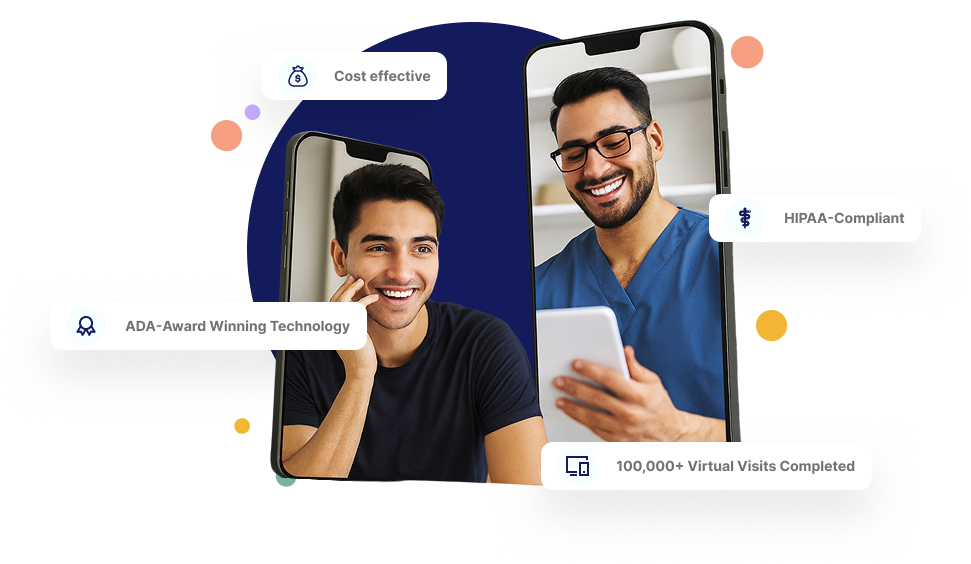

A toothache starts after hours. You notice a chip, or you want another opinion before agreeing to treatment. Finding out what to do next can feel stressful, especially when you aren’t sure whether you need an appointment right away.
An online dentist consultation can help you talk through a concern and understand your next step. It can’t replace every exam or procedure, though. Here’s what to know before you book.
Online dental care, also called teledentistry or virtual dental care, connects you with a dental professional using digital tools. Depending on the service, you may have a live video call or share photos and records for a dentist to review. The American Dental Association (ADA) describes these as live video and “store-and-forward” care. (ADA Policy on Teledentistry)
During a visit, you can explain what’s bothering you, show the area on camera, and ask questions. The dentist will decide whether the information is enough to offer guidance remotely or whether you need an in-person exam.

A remote consultation may be useful for discussing symptoms, deciding how soon to seek care, or reviewing a treatment plan. You might ask about:
A dentist may also consider a prescription when clinically appropriate and permitted by law. A remote visit is not a promise of a prescription, or a substitute for treatment when a procedure is needed. The ADA says care delivered through teledentistry should meet the applicable standard of care and be based on enough information to support clinical decisions. (ADA Policy on Teledentistry)
A video call can help you discuss a problem, but it can’t provide an in-person examination, take new dental X-rays, or carry out a procedure. You’ll need to visit a dental office for hands-on care such as a cleaning, filling, extraction, or other treatment.
A dentist may be able to review X-rays or records you already have, but that does not mean every concern can be assessed remotely. Some problems need an exam, imaging, or other tests before a dentist can determine what is causing them. If you need a clearer overview, read how a virtual dental visit works and what it can’t do.
Rules for teledentistry vary by state. Before your visit, ask for the dentist’s name and the state where they’re licensed. Then verify their license through that state’s dental board.
The ADA provides a directory of state dental boards to help you find the right agency. The ADA also states that patients should be able to access information about a provider’s qualifications and that teledentistry providers must meet the licensing rules where the patient receives care. (ADA Policy on Teledentistry)
An online consultation can be a helpful first step when you want to discuss a concern, ask about urgency, or get guidance on where to seek care. It may also help with follow-up questions or a second opinion.
Choose in-person care when you need an examination, X-rays, or treatment. If the dentist cannot assess your concern clearly through the information you provide, they should explain what kind of follow-up is needed. The ADA’s policy calls for care coordination and referral when appropriate. (ADA Policy on Teledentistry)
A virtual dentist can help with triage, but an online visit should not delay emergency care. Call 911 or go to an emergency department if you have trouble breathing or swallowing, or severe swelling that is affecting your breathing or ability to open your mouth. (NHS dental abscess guidance)
Get urgent dental or medical help for rapidly worsening facial swelling, dental pain with a high fever, or bleeding that won’t stop. The NHS advises urgent dental care for a suspected abscess and emergency care for serious symptoms such as difficulty breathing or swallowing. (NHS: Dental abscess; NHS: Emergency dental care)
For a live consultation, you’ll usually need a phone, tablet, or computer with a camera and a reliable connection. Good lighting can help the dentist see what you’re showing them. If you’re asked to share photos, follow the service’s instructions and send them through its secure process.
An intraoral camera can capture closer views of your teeth and gums. Dentulu’s MouthCAM is designed for taking and sharing images during virtual care. It can support a conversation with a dentist, but it does not take X-rays or replace an exam.

There is no single price or coverage rule for every online dentist consultation. The fee can depend on the provider, the type of visit, and your location. Your dental plan may cover some services and exclude others; the ADA notes that covered procedures and plan limits vary. (ADA dental benefit plan FAQs)
Before booking, ask:
Don’t assume the virtual appointment or any follow-up treatment is covered. Check with both the provider and your insurer.
If a prescription is appropriate, the dentist may be able to send it to your pharmacy, subject to state and federal rules. The decision depends on your symptoms, history, and the information available. Dentulu states that prescriptions are provided when appropriate and that controlled substances are not prescribed through its online service. (Dentulu virtual consultations)
Antibiotics are not automatically the right response to tooth pain. CDC-hosted ADA guidance says antibiotics are not needed for many cases of dental pain and swelling in otherwise healthy adults; definitive dental treatment is often the priority. (CDC: Treating dental pain and swelling) If you think you need medication, describe your symptoms and health history honestly and ask what care should happen next.
Before you finish the consultation, make sure you understand your plan. Ask what to watch for, how soon you should be seen in person, and how to share the visit summary with your local dentist. If you need hands-on care, the dentist may recommend a local dental office or specialist.
The ADA recommends that teledentistry include appropriate follow-up and referral when needed. (ADA Policy on Teledentistry) Dentulu connects virtual consultations with in-office care coordination when a concern needs hands-on treatment. You can learn about Dentulu’s virtual dental consultations or explore the Dentulu website.
Yes, a remote consultation can be provided by a licensed dentist when it follows the rules in the state where you are located. Verify the dentist through your state dental board, and ask what the consultation can and cannot address. (ADA State Dental Boards directory)
A dentist may prescribe medication when clinically appropriate and legally permitted, but it is not automatic. Antibiotics are not needed for many kinds of dental pain, and a prescription alone may not address the cause. (CDC: Treating dental pain and swelling)
Coverage depends on your specific plan and the service. Contact your insurer before booking to confirm benefits, possible limits, and any amount you may owe.
A child may be able to have a virtual dental consultation, depending on the service and state requirements. Ask whether the provider sees children, what information or images to prepare, and whether a parent or caregiver needs to join. If your child has trouble breathing or swallowing, seek emergency care rather than waiting for a virtual appointment.
An online dentist can help you talk through a concern, understand your options, and decide what to do next. For procedures, imaging, or symptoms that need an in-person examination, follow up with a local dentist. When you book, check the provider’s license, confirm the cost, and leave with a clear plan for any care you still need.

 Patient Subscription
 Dental Professionals
 Vendors