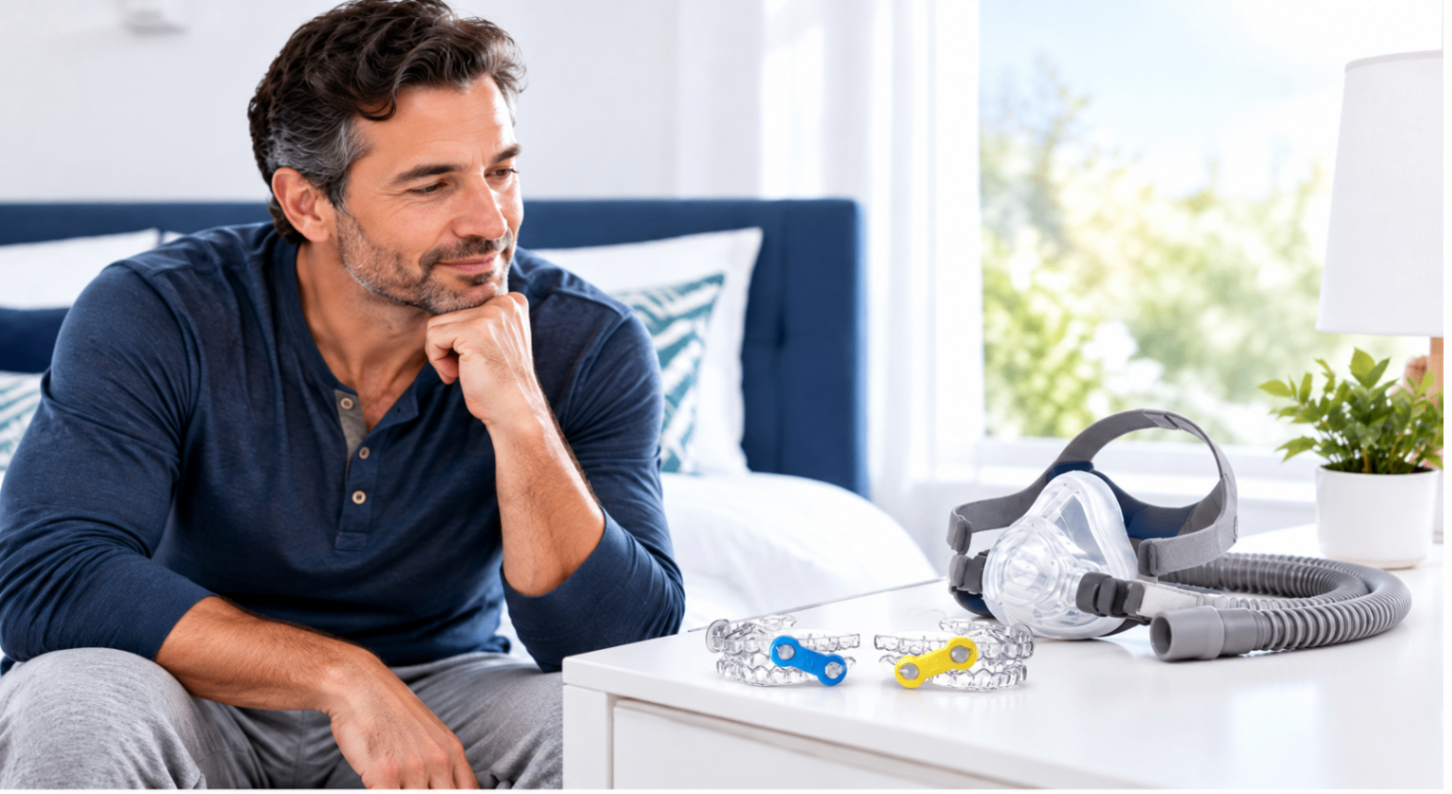
If you have obstructive sleep apnea (OSA), choosing treatment can feel like a trade-off: CPAP may be effective, but the mask and tubing can take getting used to. A mouthpiece may seem simpler, but you may wonder whether it can control your sleep apnea as well.
Here’s the practical difference: CPAP generally reduces breathing interruptions more than an oral appliance. A custom oral appliance may be an option if you cannot tolerate CPAP or prefer another treatment, and it still needs professional fitting and follow-up. Your diagnosis, sleep-test results, health needs, and comfort all matter.
CPAP uses a mask connected to a machine that delivers pressurized air to help keep your airway open while you sleep. Oral appliance therapy uses a fitted device that holds your lower jaw slightly forward to help keep the airway open.
In this article, Generic MAD refers to a custom, titratable mandibular advancement device (MAD). “Titratable” means a qualified dentist can adjust the jaw position gradually. It is not the same as an over-the-counter mouth guard for sports or teeth grinding. The AASM/AADSM guideline recommends a custom, titratable appliance fitted by a qualified dentist over a non-custom oral device.

| What matters to you | CPAP | Custom Generic MAD |
|---|---|---|
| How it works | Sends pressurized air through a mask to help keep the airway open. | Holds the lower jaw forward to help keep the airway open. |
| Effect on breathing events | Generally reduces the apnea-hypopnea index (AHI) more than an oral appliance. AHI measures breathing pauses and shallow breaths per hour of sleep. | Can reduce AHI, but the effect varies. It may not control OSA as well as CPAP for some people. |
| Comfort and routine | Requires a mask, tubing, and machine. | Worn in the mouth; does not use a mask or machine. |
| Possible side effects | Mask discomfort, dry nose or mouth, and skin irritation can occur. | Jaw or tooth discomfort and changes in tooth position or bite can occur over time. |
| Follow-up | Your care team can help address fit and comfort issues. | A qualified dentist should monitor fit and dental effects; a sleep physician may arrange a follow-up sleep test. |
The AASM/AADSM guideline found that CPAP was more effective than oral appliances at reducing AHI and improving oxygen-related measures. It also found that oral appliance therapy can improve daytime sleepiness and quality of life; improvement in reported daytime sleepiness was comparable to CPAP in the evidence reviewed. The guideline reports better adherence with oral appliances, but notes limitations in how adherence was measured. So, comfort and consistent use matter, but a more comfortable device is not automatically the more effective one for your sleep apnea. (AASM/AADSM guideline; ADA evidence brief)
For adults with OSA, the American Academy of Sleep Medicine recommends positive airway pressure (PAP), including CPAP or APAP, for ongoing treatment. The PAP guidance applies across OSA severity, though your clinician should consider your symptoms and overall health when recommending care. (AASM PAP guideline)
The AASM/AADSM guideline recommends considering oral appliance therapy for adults who are intolerant of CPAP or prefer an alternative. When it is prescribed, the guideline favors a custom, titratable device fitted by a qualified dentist. This makes a Generic MAD a clinically guided treatment option, not a do-it-yourself substitute for diagnosis or care. (AASM/AADSM guideline)
CPAP may be a suitable option to discuss with your sleep physician if:
Some people experience mask discomfort, a dry nose or mouth, or skin irritation with CPAP. These problems may improve with a better-fitting mask, a different mask style, or humidification. Mayo Clinic recommends discussing persistent fit or comfort problems with your healthcare team rather than stopping treatment without guidance. (Mayo Clinic: CPAP problems and solutions)

A custom Generic MAD may be worth discussing if you cannot tolerate CPAP or would prefer an oral appliance after reviewing your options with your sleep physician. It may also appeal to you if you want to avoid wearing a mask and using a machine at night.
Keep expectations realistic. Oral appliances can reduce OSA, but they do not work equally well for everyone, and CPAP generally reduces AHI more. A dentist should check whether your teeth and jaw are suitable for the device, fit and adjust it, and monitor side effects. Jaw discomfort, tooth discomfort, and bite changes can occur, particularly with longer-term use. (AASM/AADSM guideline; systematic review of dental and skeletal effects)
You do not have to guess which treatment is right based on snoring or comfort alone. A sleep evaluation and objective testing can confirm whether you have OSA and help guide treatment. The AASM diagnostic guideline describes when sleep testing is appropriate and how a clinician should use it to assess suspected OSA. (AASM diagnostic testing guideline)
No. A night guard is often intended to protect teeth from grinding. A Generic MAD for OSA is a custom, titratable oral appliance designed to hold the lower jaw forward. The AASM/AADSM guideline favors custom devices fitted by a qualified dentist over non-custom oral devices. (Guideline)
It may be an alternative for adults who cannot tolerate CPAP or prefer another treatment, but it is not a guaranteed replacement for everyone. CPAP generally reduces AHI more. If you use an oral appliance, follow-up with your dentist and sleep physician is important to assess dental effects and confirm treatment efficacy. (AASM/AADSM guideline)
Tell your healthcare team. A mask that does not fit well, dryness, or skin irritation may be addressed by changing the fit or mask style, or adjusting humidification. Avoid stopping prescribed treatment without discussing your next steps with your clinician. (Mayo Clinic)
When comparing sleep apnea mouth guard vs CPAP, keep the central trade-off in view: CPAP usually provides stronger control of breathing events, while a custom Generic MAD may suit some people who cannot tolerate CPAP or prefer an oral appliance. Neither option should be chosen by guesswork, or treated as a cure.
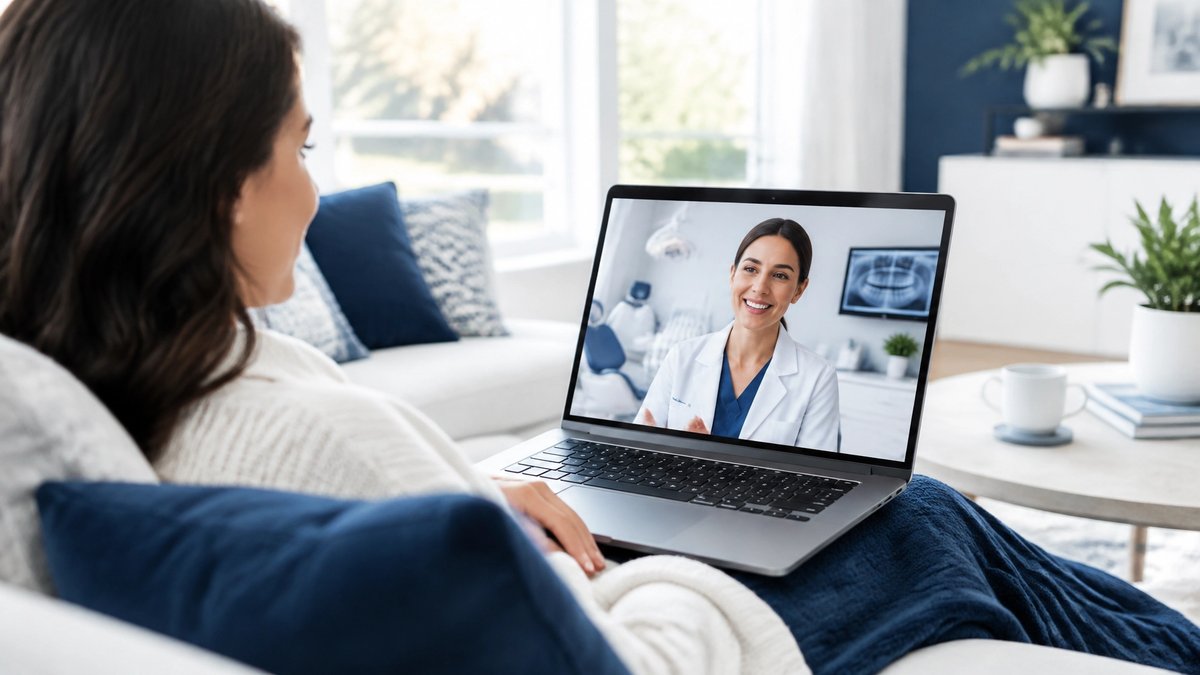
Start with your sleep-test results and a conversation with your sleep physician. If you are considering oral appliance therapy, ask how the device will be fitted, monitored, and checked for effectiveness.

 Patient Subscription
 Dental Professionals
 Vendors