For millions of people, a good night’s sleep feels like a distant memory. Whether it’s the constant fatigue, the morning headaches, or the rhythmic thunder of snoring that keeps a partner awake, sleep apnea is more than just a nighttime nuisance it is a serious medical condition.
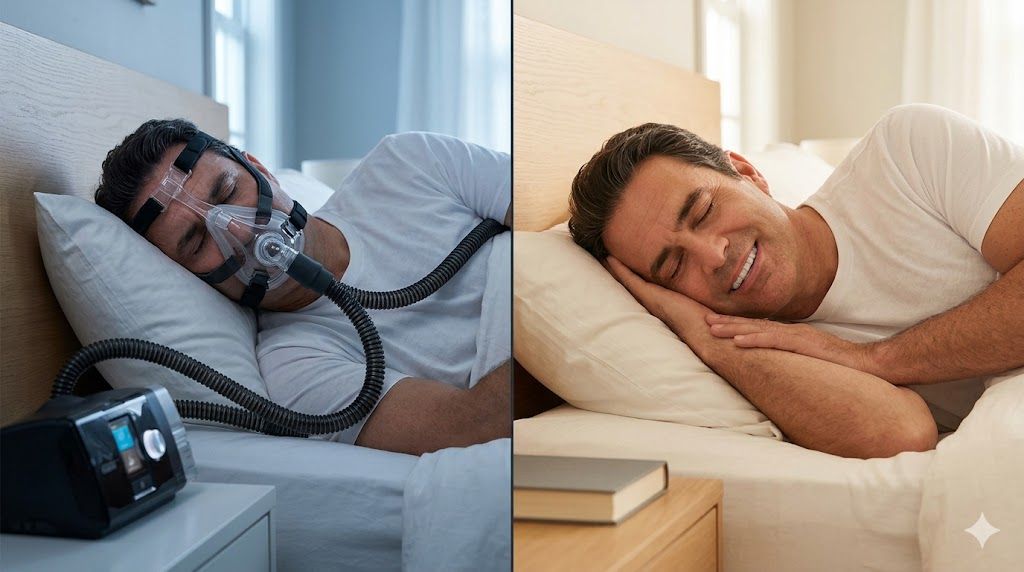
If you’ve been diagnosed with Obstructive Sleep Apnea (OSA), you’ve likely heard of CPAP (Continuous Positive Airway Pressure). While effective, many patients find themselves struggling with the “Darth Vader” mask, the loud hum of the machine, and the restricted movement. Fortunately, modern dentistry has introduced a game-changer: the Dental Sleep Positioning Oral Appliance.
In this guide, we’ll explore how Dentulu is leading the way in sleep health, comparing the oral appliance to the traditional CPAP, and explaining how you can get treated from the comfort of your own home often for little to no out-of-pocket cost.
What is a Sleep Apnea Mouthguard?
A sleep apnea mouthguard, or Mandibular Advancement Device (MAD), is a custom-fit dental appliance designed to be worn while you sleep. Unlike a standard sports mouthguard, these are precision-engineered medical devices.
How it works: The appliance gently shifts your lower jaw slightly forward. This subtle movement keeps the soft tissues at the back of your throat from collapsing, which is the primary cause of airway obstruction. By keeping the airway open, the device eliminates snoring and ensures a steady flow of oxygen throughout the night.
Oral Appliances vs. CPAP: Which is Right for You?
For years, the CPAP was the only “gold standard.” However, clinical studies now show that for mild to moderate sleep apnea, oral appliances are just as effective, with one major advantage: Patient Compliance.
The CPAP involves a mask, hoses, and a motorized pump. It requires electricity and a gallon of distilled water for the humidifier. In contrast, an oral appliance fits in your pocket. It’s silent, requires no power, and allows you to sleep in any position even on your stomach.
Statistics show that nearly 50% of CPAP users eventually stop using their machines because of claustrophobia, skin irritation, or noise. Oral appliances have a 90% compliance rate. After all, the best treatment is the one you actually use.
CPAP machines, even “quiet” ones, produce a mechanical hum. Oral appliances are completely silent. They don’t just treat your apnea; they restore peace and quiet to your bedroom, often improving the sleep quality of your partner as well.
The Dentulu Sleep Workflow: A Step-by-Step Guide
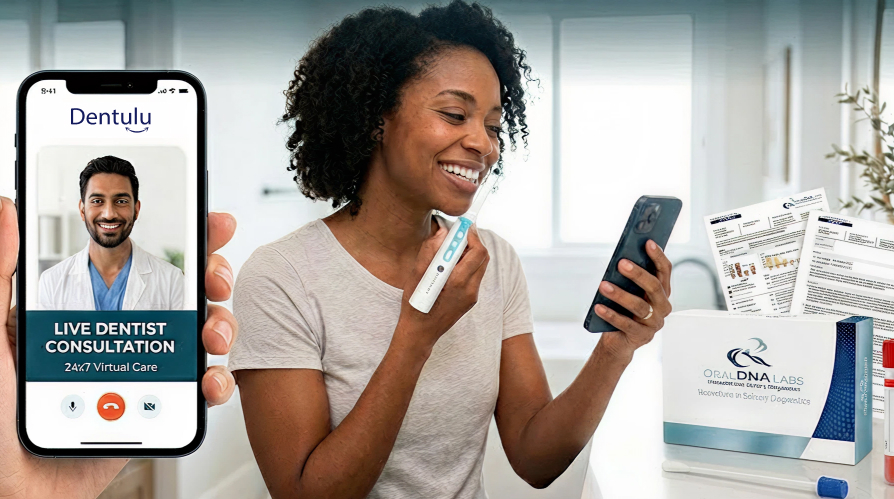
At Dentulu, we’ve removed the barriers to sleep health. You no longer need to spend a night in a cold, clinical sleep lab. Our entire process is virtual and home-based.
Phase 1: Evaluation & Testing (Week 1)
Phase 2: Custom Fabrication (Week 2-3)
Phase 3: Fitting & Ongoing Care (Week 4+)
Insurance and Affordability: We’ve Got You Covered
One of the biggest misconceptions is that dental sleep devices are an expensive “elective” luxury. Because sleep apnea is a medical condition, Oral Appliances are covered under Medical Insurance, not just Dental Insurance.
At Dentulu, we believe everyone deserves to breathe better. That’s why we offer comprehensive insurance support:
Conclusion: Take Control of Your Sleep Today
Sleep apnea is more than just “loud snoring.” It increases the risk of stroke, heart disease, and Type 2 diabetes. It robs you of your energy and your quality of life.
With Dentulu’s modern approach, getting help is easier than ever. No bulky machines, no overnight lab visits, and no complicated insurance forms. From your first online assessment to your final virtual fitting, we are with you every step of the way.
Don’t wait for a health crisis to take your sleep seriously. Visit Dentulu.com today and start your journey toward a rested, healthier you.

 Patient Subscription
 Dental Professionals
 Vendors