For decades, dental care existed in its own lane. You saw a dentist for your teeth and gums, a physician for everything else, and the two rarely spoke to each other. Medical charts and dental charts sat in different systems, often at different addresses, reviewed by different people who had no reason to compare notes.
That separation is starting to close. Not as a distant possibility, but as something already showing up in how care is delivered, coordinated, and paid for. Integrated dental care where oral health is treated as connected to, rather than separate from, overall health is no longer a talking point at conferences. It’s becoming the way forward looking at how practices, health systems, and patients are already operating.
Why the Mouth Never Belonged in its Own Silo
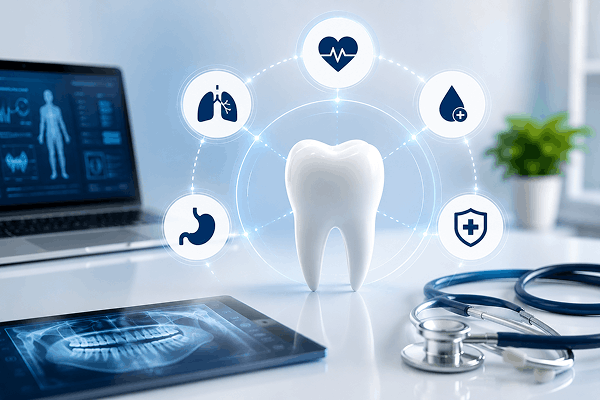
The idea that oral health stands apart from the rest of the body was always more a byproduct of how healthcare got organized than a reflection of how the body actually works. The mouth is connected to the same bloodstream, the same immune system, and the same daily habits that shape a person’s overall health.
Dental and medical professionals have increasingly pointed to this connection over the years flagging associations between gum health and conditions such as diabetes, cardiovascular disease, and sleep related breathing issues. The specifics of that research continue to evolve, and no single visit to the dentist can diagnose a systemic condition. But the underlying premise that the mouth can offer an early, visible signal of what’s happening elsewhere in the body is exactly why more providers are rethinking how dental and medical care should work together, rather than in parallel.
What “Integrated” Actually Means in Practice
Integrated care isn’t a slogan; it’s a set of concrete shifts in how care is delivered:
Shared context, not separate records. When a dental provider can see relevant pieces of a patient’s medical history and a physician can see relevant dental findings, decisions get made with a fuller picture and not impartially.
Coordination across visits. Instead of a dental finding sitting in isolation until the next physical, integrated models create a pathway for that finding to be flagged, communicated, and followed up on across the patient’s broader care team.
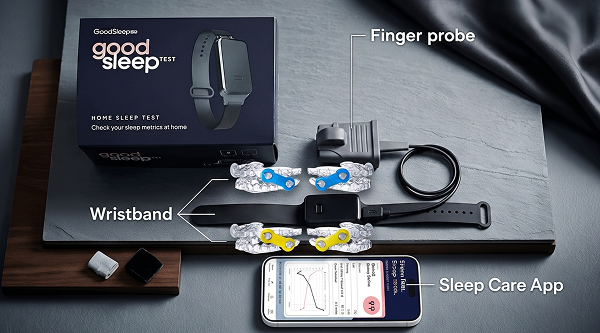
Virtual and at-home tools as an on ramp. Virtual dental visits, remote consultations, and at-home diagnostic tools make it easier to catch something early and route the patient to the right next step, rather than waiting for a standalone appointment months away.
Prevention over reaction. A connected model shifts the default from “treat the problem once it’s obvious” to “watch for the early signals and act sooner,” which tends to be better for the patient and less costly for the system overall.
Why This Is Happening Now
A few forces are converging at once. Telehealth normalized the idea that meaningful care doesn’t require an in-person visit for every step. At-home diagnostics and remote monitoring tools have matured to the point where they can support not replace clinical judgment. And healthcare more broadly has been moving towards value-based, preventive models that reward catching issues early rather than only treating them after the fact.
Dentistry has been a step behind general medicine on this shift, largely because dental and medical care have historically been billed, staffed, and recorded through entirely separate systems. But the underlying tools connected platforms, virtual visits, care coordination software now exist to close that gap. The practices, platforms, and health systems building around this model aren’t betting on a future trend; they’re responding to infrastructure that already works today.
What It Looks Like for the People Involved
For patients, an integrated approach can mean more convenient access to care, fewer disconnected appointments, and a better chance that something noticed in one setting doesn’t get lost before it reaches the right provider.
For dental practices and providers, it means being positioned as part of a patient’s overall care team rather than a separate stop, with more ways to coordinate on complex cases.
For payers and employers, a more connected, prevention oriented model lines up with the broader push towards catching issues earlier and reducing the downstream cost of care that goes unaddressed for too long.
None of this requires a leap of faith; it’s a description of tools and workflows that are already in use, in various forms, across the industry.
A Platform Built for this Shift
This is the thinking behind Dentulu: a connected care platform that treats the mouth as part of the whole picture, not a separate entity. By bringing together virtual dental care, at-home diagnostics, and coordination between dental and medical providers, Dentulu is designed to support the kind of integrated, preventive care model described above making it easier for problems to be noticed earlier, addressed faster, and connected to the rest of a person’s health.
Integrated care in dentistry isn’t a five year forecast. It’s a shift already underway, and the organizations paying attention to it now are the ones best positioned to benefit from it.
| Want to see what a connected approach to dental and medical care could look like for your practice or organization? Get in touch with Dentulu to learn more. |

 Patient Subscription
 Dental Professionals
 Vendors