Know the potential cost. Ask better questions. Plan your dental care.
Dental treatment costs can vary by location, procedure, dental practice, treatment complexity, materials, and insurance coverage. If you have ever received a dental treatment recommendation and wondered whether the quoted price is typical for your area, researching local dental costs before booking can give you a useful starting point. The ADA’s patient guidance on paying for care encourages people to plan for dental expenses and compare options before treatment begins (MouthHealthy, ADA).
A dental cost estimator from Dentulu helps you explore potential treatment costs without having to call multiple dental offices just to get a general idea of pricing.
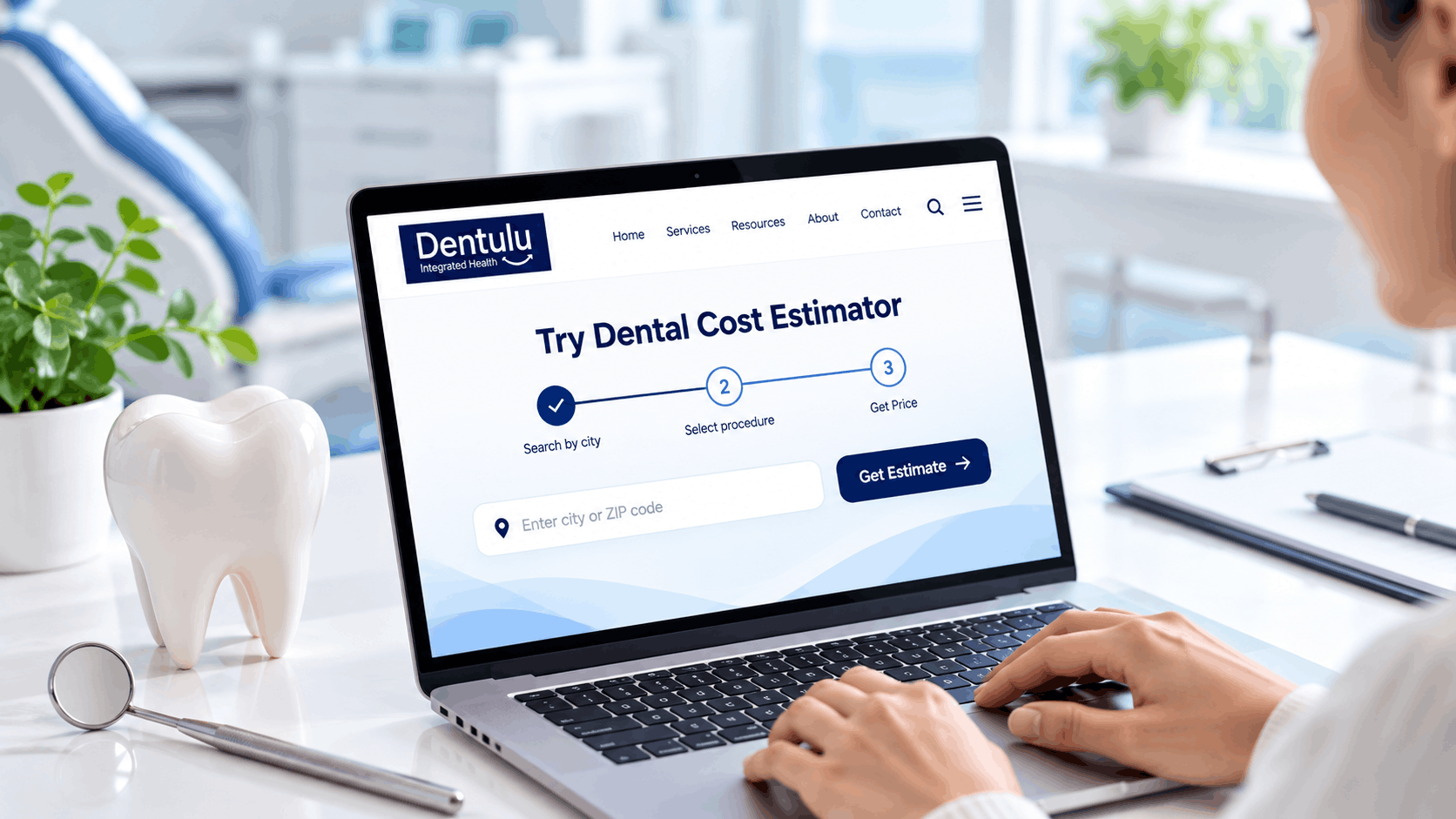
Dentulu’s estimator is built around three simple steps: search by city or ZIP code, select the procedure you are considering, and view the estimated price range. Because dental fees can differ between locations and practices, the estimate should be used as a reference rather than a personalized treatment quote.
Knowing the potential cost of a procedure can help you prepare for a conversation with your dentist. It can also help you identify questions to ask about the proposed treatment and what is included in the quoted price.
Checking an estimate before you book can help you:
There is no single price for every dental procedure. A cleaning, filling, crown, root canal, extraction, or implant may have different prices depending on where the treatment is provided and the details of the case. The ADA makes a similar point in its plan-comparison guidance: knowing approximately what you will pay, and how coverage limits work, makes dental costs easier to manage (MouthHealthy, ADA).
The cost shown by an online estimator is therefore best viewed as a starting point for research. Your actual price may be different because of your dental needs, the complexity of treatment, materials, additional services, insurance coverage, and the pricing of the individual dental practice.
Rather than searching for one national number, it helps to think in categories:
An estimator narrows these categories down to your location, which is what makes the output more useful than a general national average.
Bring these questions to your appointment so you can compare quotes with confidence:
If you do not have dental insurance, understanding local treatment costs before scheduling care can be especially useful. A cost estimate can help you plan questions and consider your options, but it should not be used to decide whether a treatment is medically necessary.
If a recommended treatment is expensive or complex, you may also want to ask a qualified dentist to explain the diagnosis, treatment options, expected outcomes, and costs. Dentulu provides virtual consultation and second-opinion services that can be explored as part of that process. Our dental insurance resource page and our article on managing dental costs without insurance cover more ways to keep care affordable.
Dentulu’s Dental Cost Estimator gives patients a simple way to begin researching dental prices. Instead of relying only on a general national average, you can enter the location where you plan to receive care and explore pricing information for the procedure you are considering.
Try the Dental Cost Estimator: https://www.dentulu.com/dental-cost-estimator/
Once you have reviewed the estimate, use it as a starting point for your next conversation with a dental professional. Ask for an itemized treatment plan and clarify what is included in the proposed cost.
If you are uncertain about a recommended treatment, you can also consider a virtual consultation or second opinion. This can help you better understand the proposed care before making a decision. You can book a virtual visit directly through Dentulu’s online appointments or explore our full range of teledentistry services.
An estimator gives you a reference range, not a guaranteed quote. Actual prices can differ based on your specific clinical needs, the materials used, and the pricing of the practice you visit. Treat the estimate as a starting point for your conversation with the dental office.
Yes. An estimate is still useful because it shows the full local price range before insurance. You can then ask your dental office and your plan provider what portion is likely to be covered. For more detail, see Dentulu’s dental insurance page.
Ask the office to walk you through the itemized treatment plan, including what each component costs and whether alternatives exist. If the treatment is expensive or complex, a virtual second opinion can help you confirm the plan before you commit.
Cost research makes sense for planned, non-urgent care. But if you have severe pain, swelling, bleeding that does not stop, a knocked-out tooth, or signs of infection such as fever or facial swelling, contact a dentist right away. Delaying urgent care can allow the problem to become more serious and more expensive to treat.
You do not have to wait until you receive a dental bill to start researching treatment costs. Whether you are considering a cleaning, filling, crown, extraction, implant, or another procedure, a location-based dental cost estimator can help you begin with useful pricing information.
Enter your city or ZIP code, select the procedure you are researching, and review the available estimate with Dentulu’s Dental Cost Estimator.

 Patient Subscription
 Dental Professionals
 Vendors