
A sip of cold water shouldn’t make you wince. Tooth sensitivity can turn everyday things, like eating ice cream or brushing your teeth, into a source of discomfort. The good news: simple changes at home may help. But lasting relief starts with understanding what’s causing the sensitivity.
Here are seven practical steps you can try, plus signs that it’s time to speak with a dentist. A virtual dental care consultation can help you discuss your symptoms and decide what to do next.
Tooth sensitivity often happens when the protective enamel wears down or the gums recede, exposing the softer layer underneath called dentin. Dentin has tiny pathways that can carry sensations toward the nerve inside the tooth. That can cause a brief, sharp response to cold, heat, sweet foods, acidic drinks, brushing, or touch.
Common causes include:
Sensitivity can also be caused by a cavity, crack, worn filling, or gum disease. Those problems need a dental assessment, so don’t assume that every sensitive tooth can be managed with home care alone.
Look for toothpaste labeled for sensitive teeth. Depending on the formula, ingredients such as potassium nitrate or stannous fluoride can help reduce sensitivity with regular use. Relief may take several days or weeks, so use the toothpaste consistently and follow its label.
If you already use a dentist-prescribed toothpaste, ask your dentist before switching. The Mayo Clinic’s overview of sensitive teeth treatments explains that desensitizing toothpaste is one option dentists may recommend.
A soft-bristled toothbrush can clean your teeth without the extra scrubbing pressure that may irritate your gums. Brush gently, using short strokes along the gumline rather than sawing back and forth.

Keep brushing twice a day. Skipping sensitive areas can leave plaque behind and make gum problems worse. If you’re unsure whether your technique is too forceful, ask a dentist to review it with you.
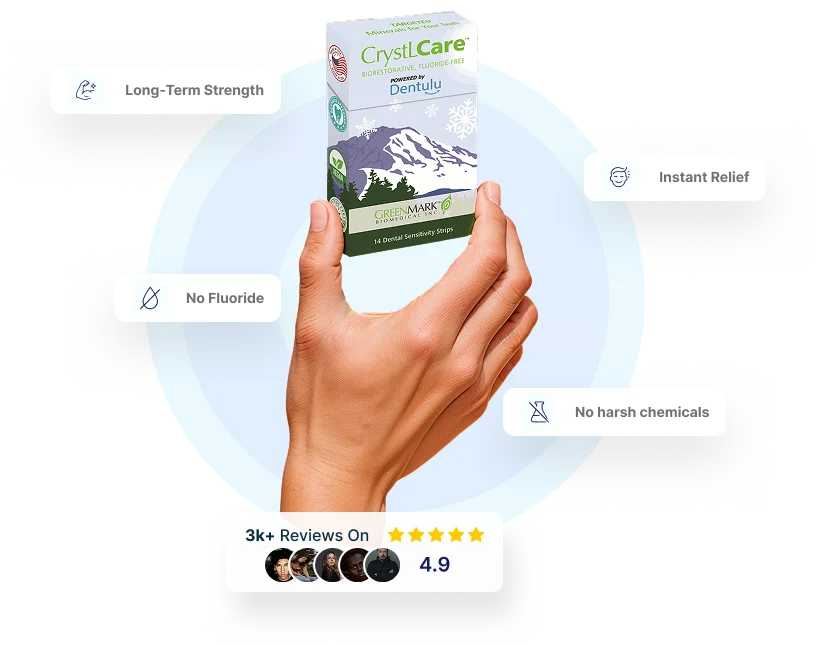
Some people want an at-home product that goes beyond toothpaste. Dentulu offers CrystLCare fluoride-free dental sensitivity strips. The manufacturer describes them as delivering calcium- and phosphate-based ingredients. Follow the product directions, and check with a dentist if you have ongoing pain or a specific health concern.
Custom dental trays are a different option. A dentist can assess whether trays and a particular gel or treatment are suitable for you, then explain how and how often to use them. Dentulu remineralization trays are designed to be used with dentist guidance. Don’t put prescription products in a tray unless a dentist has recommended them and provided instructions.
Acids in soda, sports drinks, citrus, and sour candies can soften enamel. You don’t necessarily need to avoid every acidic food. Start by limiting how often you have acidic drinks or snacks, and avoid sipping them over a long period.
After eating or drinking something acidic, rinse with water. Wait before brushing, since brushing softened enamel right away may add wear. The American Dental Association’s guide to dental erosion offers more practical ways to reduce acid exposure.
If you grind or clench your teeth while sleeping, repeated pressure can contribute to worn teeth or sensitivity. A night guard may help protect your teeth, but it won’t treat every cause of sensitivity.
Ask a dentist whether a guard is appropriate and what type makes sense for your teeth. The Mayo Clinic’s guide to teeth grinding describes mouth guards as one possible part of care.
When gums recede, the roots of your teeth can become exposed and sensitive. Home care can help protect your gums, but it cannot make receded gum tissue grow back. Use a gentle brushing technique, keep up with daily cleaning, and ask a dentist whether gum disease or another issue may be contributing.
Depending on the cause, a dentist may recommend monitoring, treatment for gum disease, or a procedure to cover an exposed root. The right approach depends on what an examination shows.
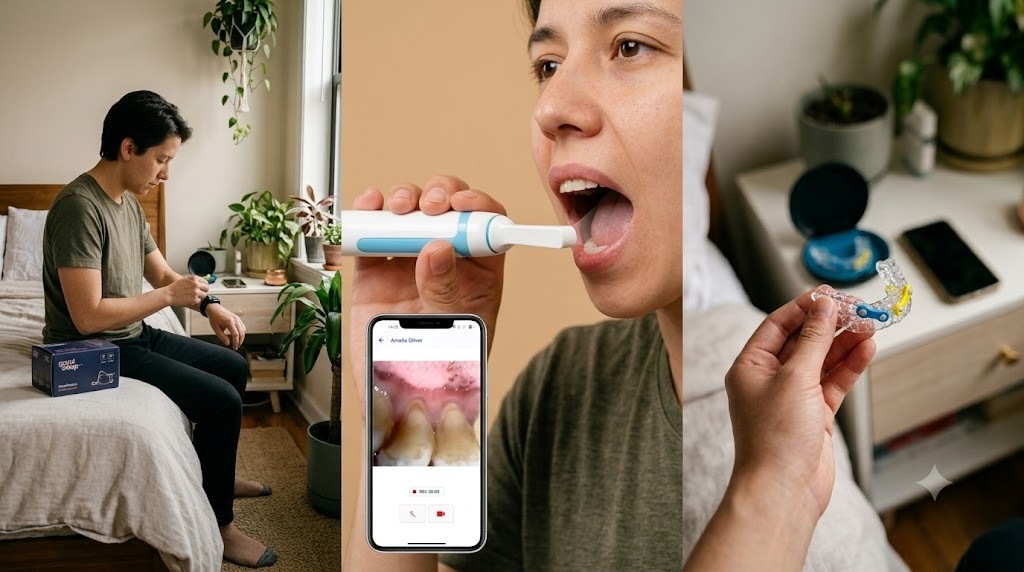
Sensitivity is a sensation; a camera can’t confirm its cause. Still, clear images may help you show a dentist which tooth concerns you and share visible changes between visits.

With MouthCAM, you can capture views of your teeth and gums at home and share them during a consultation. Think of it as a way to support a conversation, not a substitute for an exam, dental X-rays when needed, or a diagnosis from a dentist.
Book a dental appointment if the sensitivity persists, gets worse, affects one specific tooth, or doesn’t improve after you’ve consistently tried a sensitive-teeth toothpaste. Pain that lingers after a hot or cold trigger, appears without a trigger, or hurts when you bite also deserves attention.
A virtual dentist can help you talk through symptoms, review photos, and understand whether you may need in-person care. But some problems (such as a cavity, crack, or infection) require an in-office examination or treatment. Dentulu’s online dentist consultation connects you with a licensed dentist, who can guide you on next steps and whether a local dental visit is appropriate.
Seek prompt dental care for tooth pain with swelling, fever, or a bad taste in your mouth. If you have facial swelling or trouble swallowing or breathing, seek emergency care.
Follow the product label and use it consistently. If sensitivity continues or worsens, contact a dentist rather than relying on home treatment alone.
No. Home care may help manage some sensitivity, but it cannot diagnose or repair a cavity. A dentist can check for decay and recommend the right treatment.
Yes. A virtual dental consultation can help you discuss symptoms, share images, and get advice about next steps. Some concerns still require an in-person examination or treatment.
You don’t have to guess what’s behind a sensitive tooth. Dentulu brings together at-home tools, virtual dental care, and coordination with local dental offices when hands-on treatment is needed.
Book a virtual consultation to discuss your symptoms with a dentist. Dentulu’s bundle subscription includes 12 virtual visits and a free MouthCAM, so you can have convenient access to dental guidance and a way to share images from home. The dentist can help you understand your options and whether you need in-office care.

 Patient Subscription
 Dental Professionals
 Vendors