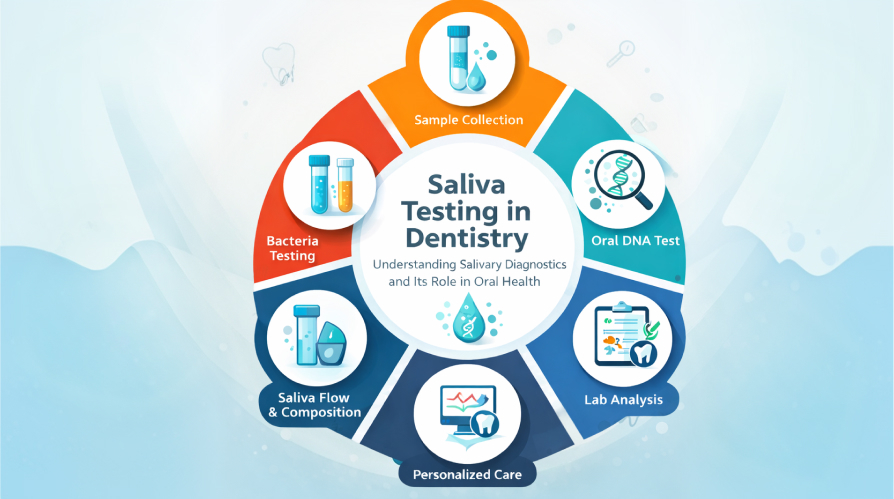
Saliva testing is becoming an important topic in modern dental care. Also referred to as salivary diagnostics, this approach uses a saliva sample to evaluate certain biological markers related to oral health.
If you’ve ever wondered “what is a saliva test used for?” or how a dental saliva test works, this guide explains the basics in a clear and informative way.
Saliva testing involves collecting a small sample of saliva for analysis. In dentistry, salivary testing is used as a non-invasive method to examine specific components present in oral fluids.
Saliva contains various substances such as enzymes, proteins, bacteria, DNA fragments, and other biological markers. A salivary diagnostics test analyzes selected elements depending on the purpose of the evaluation.
Because saliva is easy to collect and does not require needles or blood draws, many dental professionals consider it a convenient diagnostic support tool.
Salivary diagnostics refers to the scientific evaluation of saliva to gather information relevant to oral health.
In Dentulu’s Saliva Testing, the process typically involves:
The goal of a salivary diagnostics test is to provide additional information that may help guide personalized dental care decisions.
There are different types of dental saliva test procedures available depending on what is being evaluated.
Some saliva testing methods focus on identifying bacteria associated with tooth decay or periodontal concerns. Understanding bacterial levels may help dentists tailor preventive strategies.
An oral DNA saliva test analyzes genetic material from bacteria found in the mouth. This type of salivary diagnostics test is often used to identify specific microbial patterns.
Salivary testing can also evaluate saliva flow rate and composition. This may be relevant for patients experiencing dry mouth (xerostomia) or changes in oral comfort.
In addition to traditional oral DNA saliva test options, some patients may inquire about microbiome-based saliva testing platforms such as Viome. Viome testing involves analyzing RNA or microbial activity patterns from biological samples, including saliva, to evaluate microbial composition. In the context of oral health, such testing focuses on identifying and assessing microbial populations present in the mouth. Like other salivary diagnostics test methods, these assessments are intended to provide informational insights and should be interpreted by qualified healthcare professionals as part of a broader clinical evaluation.
Saliva plays a critical role in maintaining oral balance. It helps:
When saliva flow or composition changes, it can influence the oral environment. This is one reason why saliva testing has become an area of growing interest in dental research and preventive dentistry.
If you are scheduled for a saliva test dentist appointment, the procedure is typically straightforward.
The process may include:
Most saliva testing procedures are quick and non-invasive. Your dentist will review the findings and explain how the results relate to your oral health.
A dental professional may consider salivary testing for patients who:
However, salivary diagnostics are not automatically necessary for every patient. Your dentist will determine whether a dental saliva test is appropriate based on your clinical history and examination.
It’s important to clarify that saliva testing does not replace regular dental visits. Instead, it may serve as a supplemental tool.
Traditional dental exams evaluate:
Salivary diagnostics may provide additional biological information that complements these assessments.
An oral DNA saliva test focuses specifically on detecting and analyzing bacterial DNA in the mouth.
This type of test may help identify specific microorganisms that are associated with periodontal conditions. Dentists may use this information as part of a broader treatment discussion.
As with all diagnostic tools, interpretation of results should be performed by a licensed dental professional.
Saliva testing is generally considered non-invasive because it does not require blood samples or surgical procedures. Since it involves collecting natural oral fluid, the process is typically comfortable for patients.
If you have questions about whether salivary testing dental procedures are appropriate for you, discussing them with your dentist is recommended.
Preventive dentistry focuses on early identification of risk factors and personalized care planning.
Salivary diagnostics test methods may contribute to preventive approaches by:
While saliva testing provides useful insights, it is most effective when integrated into a comprehensive dental care plan.
Saliva testing continues to gain attention as part of evolving dental technology. By analyzing components within saliva, dental professionals can gather additional information about oral conditions.
If you are curious about what saliva test is used for, or whether a dental saliva test or oral DNA saliva test may be appropriate for your situation, consult your dentist for personalized guidance.
Salivary diagnostics is one of several tools available to support oral health assessment. Regular dental visits, proper oral hygiene, and professional advice remain essential components of maintaining a healthy smile.

 Patient Subscription
 Dental Professionals
 Vendors