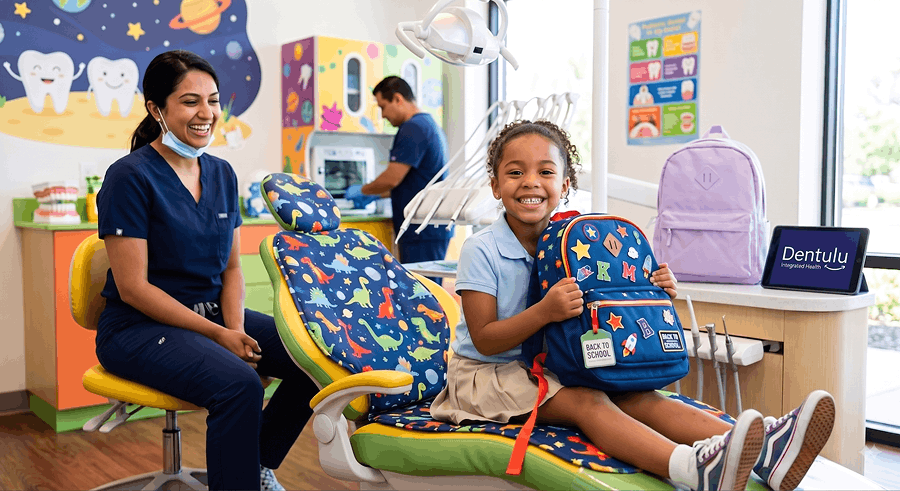
As late summer rolls around, the back-to-school checklist seems to grow longer by the day. Between shopping for school supplies, sizing up new sneakers, organizing physicals, and balancing extracurricular schedules, managing family healthcare can quickly feel overwhelming.
However, your child’s smile plays a much larger role in their overall wellness and academic success than you might think. Untreated tooth decay, chronic mouth pain, or poor oral hygiene habits directly impact a student’s concentration, attendance, and self-confidence in the classroom. Dental cavities are among the most common chronic conditions of childhood, and they are largely preventable (CDC).
Integrating routine dental care into your family’s broader health routine ensures your child starts the new school year focused on learning, not discomfort.
Summer is notorious for throwing daily structures off track. Late bedtimes, erratic brushing routines, and easier access to sugary drinks, popsicles, and snacks take a quick toll on young teeth.
A late-summer or early-autumn checkup acts as a natural reset button. It provides an opportunity to:
If it has been a while since your child last saw a dentist, knowing what can help ease any pre-appointment jitters for both you and your child.
Even meticulous home brushing leaves behind subtle plaque buildup along the gumline and between tight teeth. A professional cleaning removes hardened plaque (tartar) and surface stains, lowering bacteria levels that cause cavities and breath issues.
Dentists rely on visual checks alongside periodic diagnostic X-rays to monitor developing teeth, root health, and tight spaces between molars where visual inspection alone isn’t enough. X-rays are only performed when necessary based on your child’s age and clinical history (MouthHealthy, ADA).
For children getting their first or second set of permanent molars (typically around ages 6 and 12), asking about sealants is a great conversation starter. Sealants are thin, protective coatings applied to the deep grooves of back chewing teeth. They act as a barrier against food particles and bacteria, reducing the risk of molar decay (CDC; NIDCR).
While you are talking about prevention, it is worth confirming your child is getting an appropriate amount of fluoride through community water, toothpaste, or professional treatments. Fluoride strengthens enamel and makes teeth more resistant to acid attacks (NIDCR). Your dentist can tell you whether your child’s fluoride exposure is on track.
If your child plays contact sports such as basketball, soccer, or football, bring their current mouthguard along to the checkup. Growth spurts and losing baby teeth alter the shape of their mouth, meaning last year’s custom or over-the-counter mouthguard may no longer fit safely or comfortably (MouthHealthy, ADA).
Managing medical records, pediatrician visits, and dental appointments across different systems often creates unnecessary friction for busy parents. Modern digital solutions are changing how families navigate preventive care by connecting different aspects of wellness into a single, cohesive experience.
By leveraging an integrated health platform like Dentulu, parents can effortlessly combine teledentistry, virtual consultations, and remote oral health tracking with their child’s broader healthcare management. Whether you need to consult a specialist about a sudden toothache before school, get a virtual second opinion on pediatric orthodontic recommendations, or share oral health records with your child’s primary care team, having dental care tied directly into a connected digital health ecosystem makes staying proactive simple and convenient.
A child’s dental scare rarely happens at a convenient time. A chipped tooth on the playground or a sudden toothache the night before a test can be assessed quickly through a virtual dental appointment, where a licensed dentist can look at photos, ask questions, and tell you whether the situation needs urgent in-person care or can wait for a scheduled visit. That first professional contact can calm both parent and child and prevent unnecessary emergency-room trips for issues a dentist is better equipped to handle.
While professional care and digital health tools set the baseline, daily care at home maintains it. Here are three straightforward ways to help your child keep their teeth healthy throughout the busy school term:
Most children benefit from a dental checkup every six months, though your dentist may recommend more frequent visits based on your child’s cavity risk, oral hygiene, and development. If it has been more than a year since the last visit, a back-to-school checkup is a natural point to restart the routine.
Yes. Sealants are a widely used, non-invasive preventive treatment recommended for children’s newly erupted permanent molars. They shield the deep grooves of back teeth where food and bacteria collect, and the CDC identifies them as an effective way to prevent cavities in school-age children (CDC). Your dentist can tell you whether your child’s molars have deep enough grooves to benefit.
Frame the visit as a checkup, not a fix. Read a picture book about dentist visits beforehand, avoid words like “shot” or “drill,” and let the dental team know about the anxiety so they can pace the appointment. Many offices also offer a simple meet-and-greet visit. Staying calm yourself is the most powerful reassurance you can offer.
Seek urgent dental or medical care if your child has facial swelling, fever alongside tooth pain, bleeding that will not stop, a permanently knocked-out tooth, or difficulty swallowing or breathing. For a chipped tooth or a toothache without these danger signs, a virtual consultation can quickly help you judge how urgent the situation really is.
Investing a few minutes in your child’s oral health today prevents missed school days tomorrow, giving them the bright, healthy smile they need to take on the new school year with confidence.

 Patient Subscription
 Dental Professionals
 Vendors