Periodontitis and Diabetes — A Two-Way Relationship: How the Mouth and Metabolism Feed Each Other
Representative foundational studies / reviews:
Periodontal disease and glycemic control — classic evidence of a bidirectional relationship (landmark review/consensus, early 2000s). PMID (foundational citation): 11755253 (Journal of Periodontology).
Tonetti MS, Jepsen S, et al. Impact of periodontal therapy on glycemic control — large RCTs and multiple trials/meta-analyses conducted between 2013–2022.
Recent systematic reviews and meta-analyses confirm that periodontal disease worsens glycemic control and that periodontal therapy modestly improves HbA1c by approximately 0.3–0.5% in pooled estimates.
Representative PubMed links:
PubMed (landmark review): https://pubmed.ncbi.nlm.nih.gov/11755253/
The Oral Microbiome and Diabetes: A Two-Way, Dangerous Feedback Loop
Diabetes and periodontitis are connected in both directions: uncontrolled diabetes increases the risk and severity of gum disease, and severe periodontitis worsens blood sugar control. This cyclical relationship means the mouth is not just collateral damage — it’s an active player in metabolic health.
Easy testing process at-home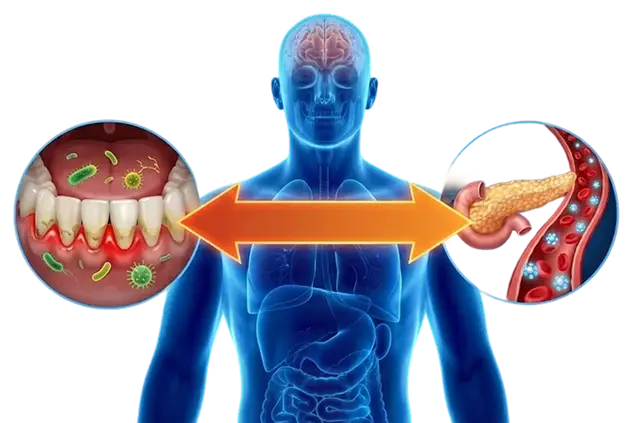
Summary
Numerous observational studies, randomized controlled trials, and meta-analyses show a consistent bidirectional relationship: diabetes increases susceptibility to periodontitis and its severity, while periodontitis elevates systemic inflammation and can worsen glycemic control. Periodontal therapy commonly produces a modest but clinically meaningful improvement in HbA1c (typically ~0.3–0.5% in pooled RCT data), comparable to adding a second-line diabetes medication in some contexts.
Key Findings
- Bidirectional association: Diabetes (especially poorly controlled) increases the risk and severity of periodontitis; in turn, periodontitis is associated with poorer glycemic control and a higher incidence of diabetes-related complications.
- Inflammation link: Periodontal inflammation elevates systemic cytokines (IL-6, TNF-α) and C-reactive protein (CRP), which promote insulin resistance.
- Therapy effect: Meta-analyses of randomized controlled trials show that periodontal therapy (scaling and root planing with or without adjunctive antibiotics) reduces HbA1c by an average of ~0.3–0.5% at 3–6 months in many pooled estimates, which is clinically meaningful for diabetes management.
- Complication risk: Poor periodontal health correlates with an increased risk of diabetic complications (including nephropathy, retinopathy, and cardiovascular events) in longitudinal cohort studies—likely mediated by chronic systemic inflammation.
- Screening value: Salivary pathogen testing can identify high bacterial load and inflammatory signatures, helping to detect patients who would benefit most from combined dental and medical intervention.
Mechanism (Mouth → Systemic → Glucose Control)
How periodontitis worsens diabetes and vice versa
- Hyperglycemia → impaired immunity: High blood glucose impairs neutrophil function, wound healing, and collagen turnover, increasing susceptibility to periodontal infection and disease severity.
- Periodontal inflammation → systemic cytokines: Local periodontal infection releases IL-6, TNF-α, and other inflammatory mediators that enter the systemic circulation.
- Cytokine-driven insulin resistance: These circulating cytokines interfere with insulin signaling in peripheral tissues, worsening insulin resistance and glycemic control.
- Feedback loop: Worsened glycemic control further impairs host defense and tissue repair in the periodontium, perpetuating periodontal disease.
- Microbial translocation & endotoxemia: Periodontal pathogens and lipopolysaccharides (LPS) may transiently increase systemic endotoxin levels, further contributing to metabolic dysfunction.
This bidirectional inflammatory feedback loop explains why improving oral health can improve systemic metabolic markers and vice versa.
CLINICAL RELEVANCE
Why patients and clinicians must treat the mouth as part of diabetes care
- Small HbA1c gains matter: A 0.3–0.5% reduction in HbA1c lowers the risk of microvascular complications and is comparable in effect to adding lower-intensity glucose-lowering therapies.
- Prevent complications: Since periodontitis is associated with a higher risk of diabetic complications, controlling gum disease is a plausible strategy to reduce long-term morbidity.
- Care integration: Dentists and diabetologists should coordinate care through referrals, treatment, and monitoring. Salivary testing can be used to triage patients who need urgent periodontal therapy.
- Low risk, high potential: Periodontal therapy carries low risk compared with its potential benefits for glycemic control and quality of life. It is a practical, measurable intervention to include in comprehensive diabetes management.
Improve Your Glycemic Profile — Start with Saliva
Detect periodontal pathogens and inflammatory markers that may be driving poor glycemic control. Dental treatment + targeted medical care = better outcomes.
Easy testing process at homeRelated Research
- Periodontitis & CRP/IL-6 (systemic inflammation)
- Diabetes-related complications and oral health
- Salivary biomarkers as predictors of diabetes risk
- Metabolic syndrome & oral microbiome
Have questions? Get answers
References
- Foundational review / consensus (example citation): A Two-Way Relationship Between Diabetes and Periodontal Disease. Journal of Periodontology. PMID: 11755253. PubMed: https://pubmed.ncbi.nlm.nih.gov/11755253/
- Representative RCT & meta-analysis sources: Tonetti MS et al. (periodontal therapy and glycemic control trials), along with multiple systematic reviews published between 2010–2023 summarizing HbA1c outcome effects.