How Oral Bacteria Trigger Atherosclerosis
Study: Atherosclerosis (2020)
PMID: 32201382
PubMed:
https://pubmed.ncbi.nlm.nih.gov/32201382/
How Oral Bacteria Trigger Atherosclerosis: The Silent Link Between Gum Disease and Heart Attacks
Atherosclerosis—the buildup of plaque in arteries—is one of the world’s leading causes of heart attacks and stroke. But what most patients never hear is this: Your mouth may be the starting point of vascular disease.
Emerging evidence shows that oral microbiome imbalances (“dysbiosis”) introduce inflammatory bacteria into the bloodstream, accelerating arterial plaque formation and vascular inflammation.
Salivary Testing with OralDNA Now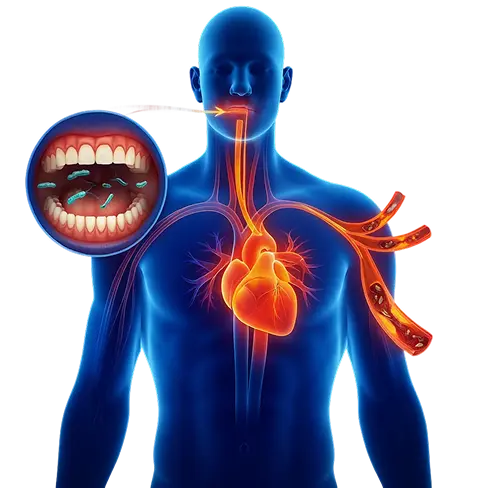
About the Study
Study: Oral Microbiota Dysbiosis and Atherosclerosis (2020)
Authors: Koren O et al.
Journal: Atherosclerosis
PMID: 32201382
PubMed:
https://pubmed.ncbi.nlm.nih.gov/32201382/
Summary
This study examined the oral microbiota of patients with confirmed atherosclerosis and found significant microbial imbalance compared to healthy controls. Several pathogenic oral bacteria were directly associated with arterial plaque buildup, systemic inflammation, and endothelial dysfunction. These findings confirm that oral dysbiosis is a measurable risk factor for cardiovascular disease.
Key Findings
- Patients with atherosclerosis had significantly higher levels of pathogenic oral bacteria.
- Porphyromonas gingivalis, Tannerella forsythia, and Fusobacterium nucleatum were associated with plaque deposits.
- Oral pathogens were detected inside atherosclerotic lesions.
- Dysbiosis correlated with elevated CRP and IL-6.
- The more severe the oral imbalance, the worse the vascular inflammation.
- Study supports a direct microbial role in atherosclerosis progression.
Mechanism (Mouth → Bloodstream → Arteries)
How Oral Bacteria Promote Artery Blockages
- Gum Inflammation (Periodontitis) Disrupts the protective barrier around teeth.
- Bacterial Entry: Oral pathogens enter the bloodstream during chewing, brushing, or in chronic gum disease.
- Endothelial Damage: Bacteria adhere to vessel walls triggering inflammation.
- Plaque Formation: Immune response leads to lipid accumulation and thickening of arteries.
- Plaque Rupture Risk: Oral bacteria increase vulnerability of arterial plaques, raising heart attack and stroke risk.
This chain of events shows a clear, biologically plausible connection between oral infection and cardiovascular disease.
Clinical Relevance
Why This Matters for Patients
- Heart disease is often viewed as a lifestyle or genetic issue — but oral bacteria play a major hidden role.
- Dysbiosis increases inflammation, a primary driver of cardiovascular risk.
- Identifying pathogenic oral bacteria early offers a preventive approach to heart health.
- Patients with gum disease have up to 2–3x higher risk of heart attack or stroke in multiple studies.
- Salivary pathogen testing is a simple, non-invasive early-warning tool.
This research reframes cardiovascular disease as partially oral in origin and largely preventable with early detection.
Take the First Step to Heart Health
A healthy heart begins with a healthy mouth.
Salivary Testing with OralDNA NowRelated Research
- Periodontitis & Systemic Inflammation
- Oral Bacteria and Stroke Risk
- Gum Disease & Heart Failure
- Salivary Biomarkers in Cardiometabolic Disease
Have questions? Get answers
Reference
Koren O, et al. Oral Microbiota Dysbiosis and Atherosclerosis. Atherosclerosis. 2020.
PMID: 32201382.