Periodontal Disease and Preterm Birth: Does Gum Inflammation Trigger Early Delivery?
Representative Review: Periodontal disease and preterm birth (Review)
PMID: 22370104
PubMed:
https://pubmed.ncbi.nlm.nih.gov/22370104/
The Oral Microbiome and Pregnancy: Could Your Gums Affect Baby’s Due Date?
Preterm birth (delivery before 37 weeks) is a leading cause of newborn illness and death worldwide. Evidence increasingly points to maternal infections and inflammation — including chronic periodontal disease — as upstream contributors to early labor.
If bacteria and inflammatory signals from the mouth reach the uterus, they can trigger the same immune cascade that initiates preterm labor.
Screen for pathogens linked to adverse pregnancy outcomes.
Start your Gum Disease Treatment Now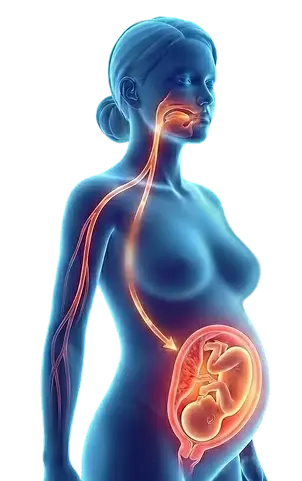
About The Study
Topic: Maternal periodontal disease and risk of preterm birth / low birth weight
Representative sources: Horton AL review (2012), Jeffcoat MK prospective study (2001), multiple later systematic reviews and clinical trials.
Summary:
Many observational studies show that pregnant women with untreated periodontitis have higher odds of preterm delivery or low birth weight. However, randomized intervention trials of periodontal treatment during pregnancy have given mixed results: reducing periodontal inflammation is good for maternal oral health, but evidence is inconsistent on whether treatment during pregnancy reliably reduces preterm birth rates.
Key Findings
- Observational studies report an association between maternal periodontitis and increased risk of preterm birth and low birth weight.
- Several pathogens and inflammatory markers (e.g., elevated maternal CRP, IL-6) are commonly elevated in affected pregnancies.
- Some clinical trials found periodontal therapy reduced preterm / low-birth-weight events in specific populations, while larger meta-analyses show consistent, statistically significant reduction overall.
- Mechanistic studies support biologic plausibility: oral bacteria or their products can reach the placenta or amniotic fluid and stimulate labor-related inflammation.
- Current consensus: periodontal disease is a potential modifiable risk factor, but timing and type of treatment influence efficacy.
MECHANISM (Mouth → Bloodstream → Uterus)
How periodontitis may contribute to preterm birth (biological pathway)
- Local oral infection: Periodontitis causes chronic bacterial colonization and persistent local inflammation.
- Systemic dissemination: Periodontal pathogens or their components (LPS, proteases) enter maternal circulation during bacteremia (e.g., chewing, dental work).
- Placental exposure: Bacterial antigens or inflammatory cytokines (IL-6, TNF-α) reach the placenta or amniotic cavity.
- Inflammatory cascade: Cytokine-driven signaling activates prostaglandin pathways and uterine contractions → premature labor.
This sequence is supported by animal models, detection of oral bacteria in placental tissues, and maternal biomarker studies.
CLINICAL RELEVANCE
Why patients (and clinicians) should care
- Preterm birth has major lifetime consequences for infants — respiratory, neurologic, and developmental. Preventable upstream risks deserve attention.
- Periodontal disease is common and treatable — even modest reductions in systemic inflammation could theoretically reduce perinatal risk in vulnerable groups.
- But: Periodontal treatment during pregnancy has not consistently shown large reductions in preterm birth across all populations—so treatment is recommended for maternal oral health and possible pregnancy benefit, but not as a guaranteed preterm-prevention strategy.
- Salivary pathogen testing can identify high-risk bacterial profiles and guide earlier preventive care (pre-conception or early pregnancy), which is more likely to be effective than late, in-pregnancy intervention.
clinical takeaway: Promote oral health before and during pregnancy; use targeted screening (salivary pathogen testing) for high-risk patients; coordinate dental care with prenatal providers.
Protect Mom and Baby — Start with the Mouth
Early detection of pathogenic oral bacteria gives a window to reduce systemic inflammation.
Start your Gum Disease Treatment Now!Related Research
- Periodontitis & Systemic Inflammation
- Oral Pathogens in Pregnancy Outcomes
- Salivary Biomarkers for Maternal Health
- Pre-eclampsia & Oral Health
Have questions? Get answers
REFERENCE
-
Horton AL. Periodontal disease and preterm birth. JADA Review. 2012. PMID: 22370104.
https://pubmed.ncbi.nlm.nih.gov/22370104/ -
Jeffcoat MK et al., Periodontal infection and preterm birth. PMID: 11480640.
https://pubmed.ncbi.nlm.nih.gov/11480640/ -
Terzic M et al., Periodontal pathogens and preterm birth. 2021.
https://pmc.ncbi.nlm.nih.gov/articles/PMC8227634/